The Ota Air Base Encounter: A Portuguese Air Force Pilot Circled by a Disc (1982)
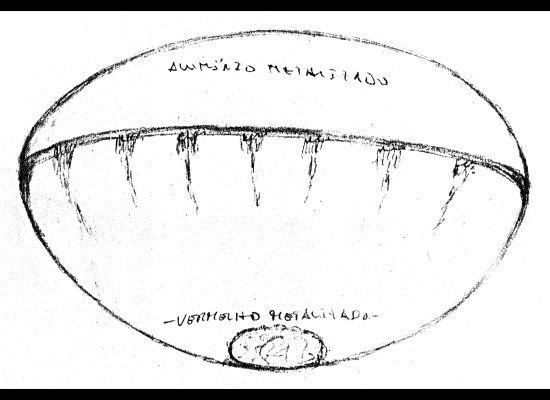
On the morning of 2 November 1982, Portuguese Air Force pilot Julio Miguel Guerra was flying a single-engine DHC-1 Chipmunk trainer northward over the region of the Montejunto mountain and Torres Vedras, near Ota Air Base, about 50 km north of Lisbon. This case file covers what witnesses reported, the official narrative, and a two-pass assessment with its evidence tier.
What did witnesses see at Near Ota Air Base?
On the morning of 2 November 1982, Portuguese Air Force pilot Julio Miguel Guerra was flying a single-engine DHC-1 Chipmunk trainer northward over the region of the Montejunto mountain and Torres Vedras, near Ota Air Base, about 50 km north of Lisbon. He was 29, a lieutenant with ten years of service, working as a flight instructor with 101 squadron, flying solo and heading to his "echo" training zone to climb to 6,000 feet for aerobatics. In his own words it was "a beautiful, clear day with no clouds." The time was about 10:50 a.m.
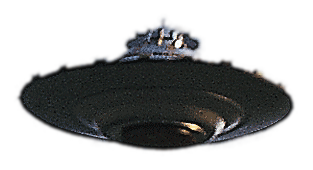
Overflying the Maxial zone at an altitude of 5,000 to 5,500 feet, Guerra noticed below him and to his left, near the ground, what he first took for "another aircraft." After a few seconds he realized it had no wings and no tail, "only a cockpit," an oval shape. He turned his Chipmunk 180 degrees to the left to follow and identify it. The object then did something no aircraft could: it "climbed straight up to my altitude of 5,000 feet in under 10 seconds," stopped directly in front of him with some initial wobble and oscillation, then stabilized and hung motionless. He now saw it clearly as a metallic disc made of two halves, an upper and a lower, with "some kind of band around the center," the top brilliant and reflecting the sun, the bottom a darker tone. The IUR photo caption records the colors as "metallic aluminum" on top and "metallic red" on the bottom. In later renderings of his account he described it as round, "two halves shaped like two tight-fitting skullcaps," the lower one "somewhere between red and brown with a hole or dark spot in the center," and the center band as looking "like it had some kind of a grid, and possibly a few lights."
The object then flew "at a fantastic speed in a large elliptical orbit to the left, between 5,000 feet to the south and approximately 10,000 feet to the north, always from left to right, repeating this route over and over." Guerra radioed the tower that a strange object was flying around him. The controller, and pilots in three or four other aircraft, told him it must be "some kind of balloon," and some made fun of him. He shot back: if it was a balloon, how could it climb from the ground to 5,000 feet in a few seconds? "The response was silence." He was alone with the object for about 15 minutes, watching it repeat its elliptical course while he tried to keep it in view.
Two fellow Air Force officers, Carlos Garces and Antonio Gomes, flew out in a second Chipmunk and joined him after about 15 minutes. Guerra gave them the position; once they had it in sight he "felt better, because now two more Air Force pilots had seen the same thing." For roughly 10 more minutes the three watched the object trace nearly identical loops. Guerra flew inside the orbit and the other two flew outside it, so the object passed between the two planes on each pass. Using the known length of a Chipmunk fuselage (7.75 meters) as a ruler, they put the object's size at about eight to ten feet across. Then Guerra decided to attempt an interception, aiming slightly to the side of the object's track to force it to change course. Instead, the object came straight at him, flew right over the top of his aircraft and "stopped there, like a helicopter landing but much, much faster, breaking all the rules of aerodynamics," hovering only about 15 feet away. "I was astonished. I closed my eyes and I froze." Then, in his words, "There was no impact." The object shot off in a flash toward the Serra de Sintra and the sea, too fast for him to react. One of the other pilots saw the entire final maneuver.
What is the official explanation?
This is one of the rare daylight pilot cases that produced a formal paper trail and an officially sanctioned investigation rather than a brush-off. On landing at Ota, all three pilots filed detailed, independent written reports to the Portuguese Air Force, and the day after the encounter Guerra made a careful drawing of the object and submitted it with his report. That contemporaneous sketch, showing the two-hemisphere disc with its central band, is the canonical image of the case.
What sets the case apart is the response of the Air Force Chief of Staff, General Jose Lemos Ferreira, who held that post from 1977 to 1984. Rather than burying the reports, Lemos Ferreira authorized the release of all the records to a civilian scientific study group and granted access to data and to the Ota base. The body that took up the case was CNIFO, the Comissao Nacional de Investigacao do Fenomeno Ovni (National Commission for the Investigation of the UFO Phenomenon), founded in 1982 and directed by the historian Joaquim Fernandes of the group that later became the Centre for Transdisciplinary Studies at Fernando Pessoa University. French and Portuguese accounts drawn from the CNIFO file describe an inquiry running across 1983 and 1984 that drew on roughly thirty scientists and specialists, including physicists, meteorologists, psychologists and engineers, and produced a report of more than 170 pages.
The investigators reconstructed the object's flight from the pilots' descriptions of the elliptical orbit and the known aircraft positions. Their figures, as published in Leslie Kean's book and repeated in the CNIFO-derived sources, put the object's vertical climb at over 300 mph and its horizontal velocity at roughly 1,550 mph (about 2,500 km/h) as it circled Guerra's aircraft, for an object only eight to ten feet across. The team compared Guerra's drawing against known aircraft of the era and found no match in configuration or performance. The meteorological side of the inquiry confirmed the clear conditions the pilots reported and ruled out atmospheric misidentification.
The only conventional explanation ever floated was the "balloon" remark made over the radio during the event by the tower and by other pilots, and that was offered in the moment, not as the product of any analysis. Guerra rejected it on the spot on simple physical grounds, and the investigation did not adopt it. The Portuguese Air Force's own outcome was to leave the sighting on the books as unidentified, placing it among the small fraction of cases for which, in the language of the file, no explanation was ever found. Guerra's account was later reprinted with permission as "Circled by a UFO" in the J. Allen Hynek Center for UFO Studies International UFO Reporter (Vol. 33 No. 3, December 2010), drawing from pages 47 to 49 of Kean's book.
What did the witnesses think it was?
Julio Miguel Guerra was not a casual observer. He joined the Portuguese Air Force in 1973, served eighteen years, and at the time of the sighting was a flight instructor responsible for training other military pilots. After leaving the service in 1990 he flew as a Line Captain for Portugalia Airlines, Portugal's largest commercial carrier, and across his career logged on the order of 17,000 flight hours. He has held to the same account for four decades, from his 1982 military report through his written chapter for Kean's 2010 book, without material change. He has never claimed to know what the object was. His framing has consistently been that of a professional pilot describing flight behavior that his training could not account for: a stationary climb from ground to 5,000 feet in seconds, instantaneous reversals at the ends of an elliptical track, a helicopter-style stop directly over his canopy at speeds no helicopter could survive, and a departure "in a flash" with no sonic boom and no visible propulsion.
The corroboration is the spine of the case. Guerra was first joined on the radio by skepticism, then in the air by two trained witnesses, Carlos Garces and Antonio Gomes, who flew out specifically to look and who then watched the object loop between their two aircraft for about ten minutes before filing their own separate reports. Three independent military reports filed the same day, in agreement on shape, size, color and the elliptical flight pattern, is an unusually strong evidentiary base for a pilot case.
There is a second layer of witness credibility behind the official handling. General Lemos Ferreira, the Chief of Staff who opened the files, was himself a UFO witness. On 4 September 1957, leading a flight of four F-84G Thunderjets out of the same Ota base on a navigation exercise toward Spain, he and three other pilots tracked a luminous object for roughly 35 minutes as it changed color and apparent size. That experience, the famous "Caso Lemos Ferreira," is part of why a serving four-star treated Guerra's report as a genuine aviation matter rather than an embarrassment to be filed away. The investigating historian, Joaquim Fernandes, went on to preserve and publish the documentation in his work on Portugal's official UFO files, keeping the case in the academic record rather than letting it dissolve into rumor.
The dispute
The dispute in this case is narrow and weak. The only conventional explanation ever attached to the sighting is the suggestion of a balloon, and it has a specific, traceable origin: it was said over the radio during the event itself by the Ota tower controller and by pilots in three or four other aircraft, several of whom were openly mocking Guerra. No named investigator, skeptic, or analyst has ever developed it into a worked case. There is no identified balloon launch, no trajectory reconstruction, no wind-data argument, and no optical mechanism offered to explain the reported behavior. It is an off-the-cuff guess, not a method-shown debunk.
Guerra answered the balloon idea in real time with a physical objection that still stands: a balloon cannot climb from near the ground to 5,000 feet in under ten seconds, and it cannot then fly a repeating powered ellipse between 5,000 and 10,000 feet, reverse at the ends, hover fifteen feet above a moving trainer, and depart at high speed. The CNIFO scientific team that examined the file across 1983 and 1984, drawing on roughly thirty specialists and producing a report of more than 170 pages, did not adopt the balloon explanation, and the Portuguese Air Force formally left the case as unidentified. So the counter-explanation exists, which is why this is not filed as cleanly verified, but it is partial, unsupported, and contradicted by the observed dynamics and by three independent trained witnesses.
Because no independent, civilian, method-shown analysis has come close to settling the case as ordinary, the dispute does not rise to "strongly disputed." It is a "barely disputed" case: a weak official-era counter-explanation is on the record, but the evidence, the multiple military witnesses, the contemporaneous drawing, and the official investigation, leaves the encounter substantially intact and unexplained.
Is the Ota Air Base Encounter: A Portuguese Air Force Pilot Circled by a Disc (1982) real? The two-pass assessment
Pass one, how this could be entirely ordinary. The only conventional explanation that anyone raised at the time was a balloon, and it is worth taking seriously because balloons are the single most common cause of misidentified daylight objects. A drifting balloon can look metallic in sunlight, can appear to "follow" an aircraft through relative motion and parallax, and is genuinely hard to range against a featureless sky. But the specific behaviors in the report defeat the balloon reading rather than fitting it. A balloon does not climb from near ground level to 5,000 feet in under ten seconds, it does not trace a repeating powered ellipse between 5,000 and 10,000 feet against the wind, it does not stop and reverse, and it does not park itself fifteen feet above a moving trainer and then accelerate out of sight. Guerra made the climb-rate objection himself, in the moment, and the tower fell silent. Other mundane candidates fail too: there was no other known traffic, the conditions were cloudless so it was not a lenticular cloud or a sundog, and a single drone or model is ruled out by the era and by three trained pilots independently estimating an eight-to-ten-foot powered object outflying their aircraft. A pure hoax is hard to sustain when the "hoaxer" would have to be three serving officers filing separate same-day reports and a four-star general who opened the files, with no prop ever recovered and no one ever recanting. No independent, civilian, method-shown debunk of this case exists. No skeptic has produced a balloon flight, an aircraft identification, a recovered model, or a demonstrated optical mechanism that reproduces the reported maneuvers.
Pass two, if real, what is it. If the testimony is accurate, the object is a small, structured, metallic craft, roughly eight to ten feet across, capable of a standing vertical climb, sustained high-speed orbital flight, instantaneous direction changes at the ends of an ellipse, a near-zero-radius stop above a moving aircraft, and silent acceleration to roughly 1,550 mph with no sonic boom and no visible exhaust. Those are the same flight signatures that recur across the strongest military encounters, from Tehran in 1976 to the United States Navy "Tic Tac" reports of the 2000s. The two-hemisphere disc with a banded equator and a dark central spot underneath is a classic structured-craft description rather than a light or a glow. The case sits inside a Portuguese pattern of credible Air Force sightings stretching back to Lemos Ferreira's own 1957 encounter out of the same base.
It is also important to read the official handling correctly. The fact that the Air Force investigated at all, convened scientists, and then logged the object as unidentified is evidence the case was real enough to take seriously, not a mark against it. The investigation looked for a conventional answer and did not find one.
Tier. The material is well documented: the witness's own contemporaneous drawing, three independent same-day military reports, a multi-month CNIFO scientific inquiry of more than 170 pages opened by the Air Force Chief of Staff, and a published first-person account that has never wavered. The single counter-explanation on the record, the balloon, is weak, was offered informally over the radio without analysis, was rebutted by the witness, and was not adopted by the investigation. Because a counter-explanation does exist on paper even though it is partial and unsupported, the honest classification is Barely Disputed: the balloon claim keeps the case from a clean "Verified Unexplained," but it is so weak that the case very largely stands as an unexplained, officially-investigated daylight pilot encounter.
Sources
- cufos.org/PDFs/IUR%20issues/IUR%20Vol.%2033%20No.%203.pdf
- web.archive.org/web/20250817125655/https://www.ufocasebook.com/2010/guerradrawing.html
- www.lesliekean.com/ufos/contributors/contributors-chapters/
- univers-ovni.com/ufologie/guerra.html
- www.ufoinsight.com/ufos/close-encounters/982-ota-air-base-ufo
- paranormaldbase.blogs.sapo.pt/1629.html
- www.tall-white-aliens.com/portugal-ufo-sighting-airline-captain-julio-miguel-guerra/
- archive.org/details/ufosgeneralspilo0000kean
More cases from this region: UFO sightings in Portugal