The King Air Crew Over Londrina: "It Gives Us Chills" (13 July 2026)
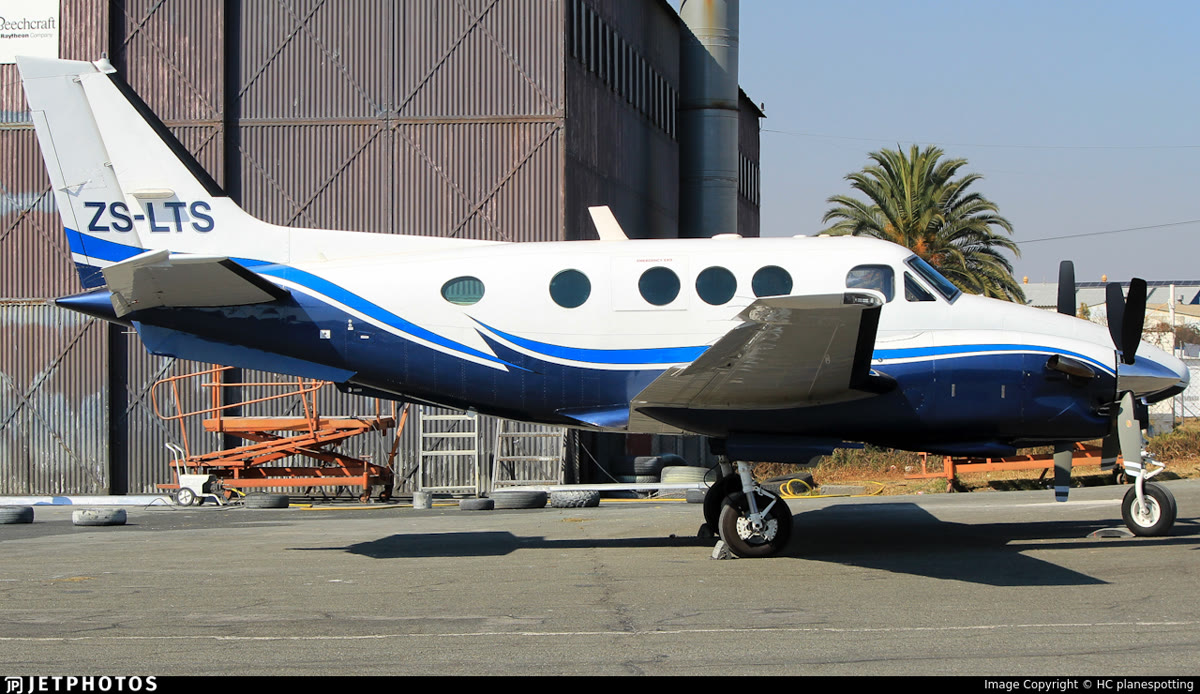
On the night of 13 July 2026 the crew of a King Air over northern Paraná called Londrina Approach with a simple question: had anyone else seen the lights to the west? The controller had. Bright, fast, at moments circling, they were caught on the open ATC frequency by a pilot audibly shaken, and the report is now with the Brazilian Air Force. A local astronomer says Starlink. The tape says unidentified.
What did witnesses see at Londrina?
On the night of Monday 13 July 2026, at around 21:00 local time, the crew of a Beechcraft King Air C90 registered PR-OTE, flying from São Paulo to Maringá, called Londrina Approach Control about lights they could not explain to the west of their position. The aircraft was roughly 20 nautical miles, about 37 kilometres, from Londrina in northern Paraná. On the recorded frequency the pilot describes lights of very strong intensity and very rapid movement, at one point apparently moving in circles, and asks the controller whether anyone else has reported them.
The pilot's own words survive on the air traffic tape. "É de intensidade muito forte e de movimento muito rápido, é inacreditável," he says, strong intensity and very rapid movement, it is unbelievable. He tells the controller the sight "dá um calafrio na gente," it gives us chills, and calls it "algo muito sobrenatural," something very supernatural, and asks to file a report. He is careful to separate a steady distant light he thinks may be a planet or a star from the bright, fast-moving lights that caught the crew's attention, which he places to the west on a heading of about 290 to 300 degrees, high and rapidly displacing.
The two aircrew were not the only witnesses. When the crew asked, the controller answered that Londrina Tower had, a short time earlier, reported lights in that same western sector, and that there was no known or scheduled traffic in the area and nothing expected to be operating there. At least one person on the ground, a follower of a local Instagram account, is reported to have recorded video of lights the same night. The clearest surviving artifact is the air traffic control audio itself, which is public, unclassified aeronautical communication and was captured on the LiveATC network for Londrina (SBLO) around 00:00 UTC on 14 July, the local evening of the 13th.
What is the official explanation?
NAV Brasil, the state company that runs the Londrina control tower, confirmed the encounter was handled as a routine safety report. In its statement the company said the report from the PR-OTE crew "foi devidamente registrado" by Londrina Approach Control "e encaminhado ao COPM," duly registered and forwarded to the COPM, the Centro de Operações Militares, the Brazilian Air Force body responsible for occurrences of this kind. NAV Brasil also noted the sighting had no impact on the safety of flight operations.
Because the traffic could not be identified at the time, the case was passed to the Aeronáutica, the Brazilian Air Force (FAB), for analysis. There is no official conclusion. As of publication the FAB had said only that its COPM would examine the occurrence, and had offered no identification. The record, in other words, is open: a formal report is inside the Air Force system, and no agency has yet said what the lights were.
What did the witnesses think it was?
The people closest to the event did not reach for an extraordinary explanation on the tape; they reached for a report. The pilot's instinct was to log the sighting and to ask, repeatedly, whether anyone else had seen the same thing, which is the behaviour of a professional trying to corroborate rather than to sensationalise. His own hedge is on the recording: he flags a steady light he suspects is a planet or star and sets it apart from the bright, fast lights that unsettled the crew. What made the case travel across Brazilian media was less the object than the voice, an experienced aviator audibly shaken, describing on an open, recorded frequency something he could not resolve, while the controller confirmed a matching report from the tower minutes earlier.
Is the King Air Crew Over Londrina: "It Gives Us Chills" (13 July 2026) real? The two-pass assessment
Pass one, the prosaic reading. The leading ordinary candidate has a name and an advocate. Miguel Moreno, who coordinates GEDAL, the Grupo de Estudo e Divulgação de Astronomia de Londrina, told local media the lights were most likely Starlink satellites, whose trains can appear in unusual orbital positions and have generated a wave of similar reports over Paraná since early the previous year. GEDAL says it photographed a comparable phenomenon near the Rio Tibagi in October and confirmed it as Starlink after the fact. A satellite train fits several details: lights concentrated in one sector of the sky, bright, in a line or cluster, seeming to move as a string of satellites crosses the field of view. The pilot's own note about a possible planet or star shows how readily point sources are misjudged at night from a moving cockpit, and the absence of any radar return or known traffic is consistent with objects far outside the aircraft's airspace.
Pass two, the anomalous reading and its limits. What the prosaic account has to explain away is the description itself. The crew reported not a slow, orderly line of satellites but lights of very strong intensity and very rapid movement, at one point circling, and the same sector had already produced a tower report minutes earlier. Multiple independent witnesses, two aircrew, tower controllers, and at least one ground observer, are exactly the corroboration-by-independence the methodology values, and the documentary record is unusually clean: a recorded ATC frequency, a named aircraft, and a formal report into the FAB. None of that makes the lights anomalous, but it makes them well-documented, and it is why the case cannot simply be closed as a satellite train on present information.
The verdict is Unknown. There is no official identification; the FAB is still to report; the strongest prosaic candidate, a Starlink train, is plausible and is pushed by a credible local astronomer, but it has not been confirmed for this specific sighting and sits uneasily with the crew's account of fast, circling, high-intensity lights. What the record does establish is solid: on 13 July 2026 an airline-grade crew, backed by tower controllers, reported lights over northern Paraná that no one on frequency could identify, and that report is now inside the Brazilian Air Force system.
Sources
- www.bonde.com.br/bondenews/londrina/audio-de-piloto-relatando-avistamento-de-ovni-em-londrina-viraliza-e-impressionante
- www.bonde.com.br/bondenews/londrina/fab-vai-analisar-avistamento-de-ovni-em-londrina-gedal-diz-que-sao-satelites-de-musk
- www.brasil247.com/geral/piloto-relata-a-torre-luzes-misteriosas-no-ceu-de-londrina-calafrios-sensacional/
- arede.info/cotidiano/661465/piloto-relata-luzes-nao-identificadas-no-ceu-do-parana
- obemdito.com.br/noticia/449188/piloto-relata-luzes-nao-identificadas-no-ceu-do-parana-e-caso-e-comunicado-a-fab
More cases from this region: UFO sightings in Brazil