The Nha Trang Engine-Stopping UFO
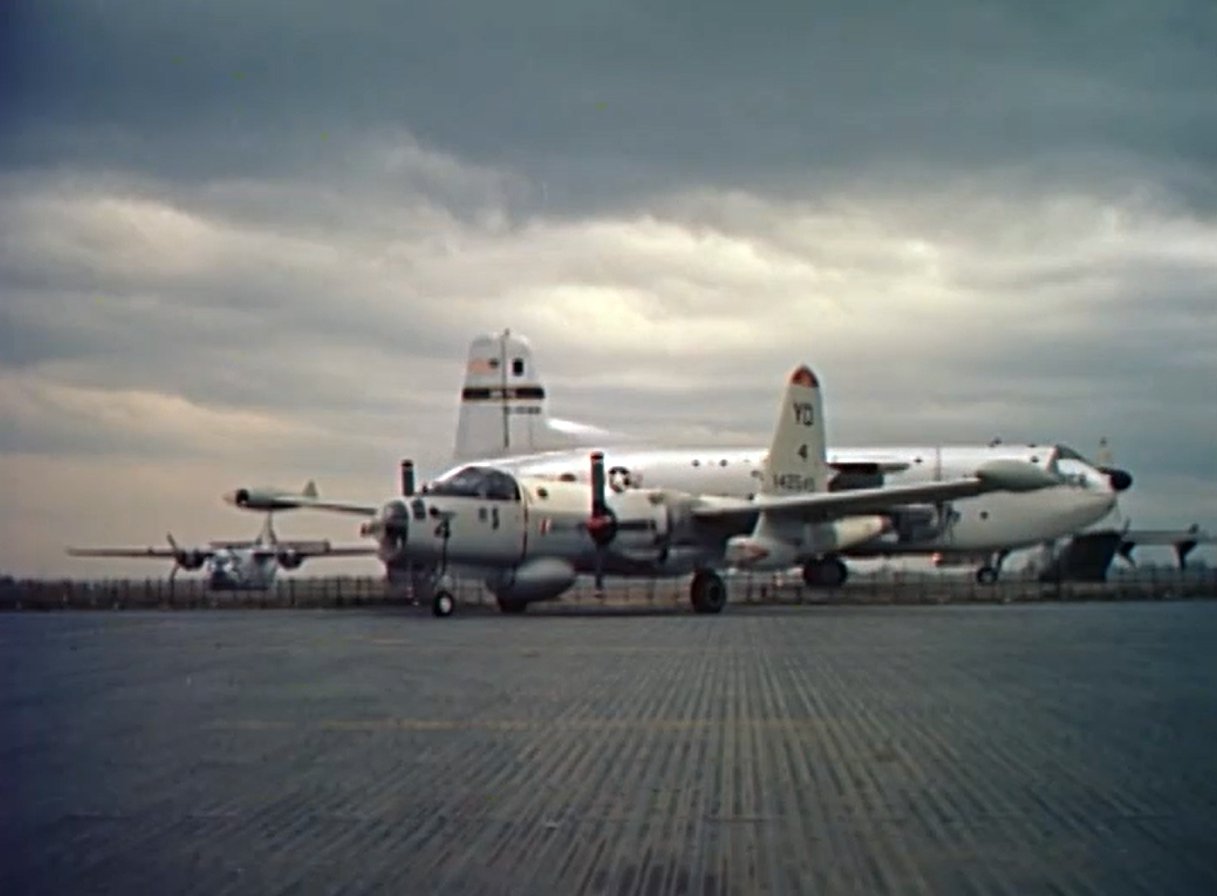
On a June 1966 night at about 9:45 p.m., several hundred American and South Vietnamese soldiers were sitting through an outdoor movie at Nha Trang Air Base, a sprawling coastal installation in a valley ringed by mountains that NICAP's source described as housing more than 40,000 troops, roughly 2,000 of them American GIs. This case file covers what witnesses reported, the official narrative, and a two-pass assessment with its evidence tier.
What did witnesses see at Nha Trang Air Base?
On a June 1966 night at about 9:45 p.m., several hundred American and South Vietnamese soldiers were sitting through an outdoor movie at Nha Trang Air Base, a sprawling coastal installation in a valley ringed by mountains that NICAP's source described as housing more than 40,000 troops, roughly 2,000 of them American GIs. The projector for the film ran off a diesel generator, one of six new, independently operated 100-kilowatt diesel generators recently installed across the base. The men had been watching the picture for a while when the sky to the north lit up.
The single named-in-rank witness, an Army Specialist 5 whose letter home Raymond Fowler later obtained, wrote that at first nobody was alarmed. "At first we thought it was a flare which are going off all the time and then we found that it wasn't." The light "came from the north and was moving from real slow to real fast." A pilot watching with the group judged the object to be up around 25,000 feet. Then, in the witness's words, "the panic broke loose. It dropped right towards us and stopped dead still about 300 to 500 feet up." The thing lit the whole valley. "It made this little valley and the mountains around look like it was the middle of the day; it lit up everything."
What turned a light in the sky into a base-wide incident was what happened next on the ground. The Specialist 5 wrote that at the moment the object hung overhead, "our generator stopped and everything was black." It was not just his generator. According to the letter, the diesel generators powering the movie, the generators at the Air Force section about half a mile away, the engines of two A-1 Sky Raider attack aircraft that were warming up on the runway, eight bulldozers grading the nearby hills, and every car, truck and vehicle on the base all died at the same instant. "There wasn't a car, truck, plane or anything that ran for about four minutes." A Shell Oil tanker anchored in the bay roughly a mile to the southwest was also said to have lost power. After those four dead minutes the object did not drift off. "Then it went up and I mean up. It went straight up and completely out of sight in about 2-3 seconds," after which the engines and generators all started working again.
The aftermath, as the soldier described it, was a scramble. He wrote home, "A whole plane load of big shots from Washington got here this afternoon to investigate," and signed off with the line that has followed the case ever since: "I swear if somebody says they saw a little green man I won't argue with them."
What is the official explanation?
There is no public Project Blue Book file for Nha Trang. In June 1966 Blue Book was still running out of Wright-Patterson, yet a base-wide electromagnetic event at a major combat installation never entered its index. That absence is itself documented context, not an oversight. Archival researcher Barry Greenwood, writing in the Project 1947 UFO Historical Revue (UHR #14, May 2015), reported that of sixteen Vietnam-era UFO reports he located in the Air Force's CACTA (Combat Air Activities) database, not one appears in Blue Book's listings. Greenwood ties this to the 1969 Bolender memo, the internal Air Force document which states plainly that "reports of unidentified flying objects which could affect national security are made in accordance with JANAP 146" and "are not part of the Blue Book system." In other words, by the Air Force's own rules, a sighting that knocked out power to aircraft, generators and vehicles at a frontline base was exactly the kind of report that would be routed away from Blue Book and toward security channels, classified SECRET, which is consistent with the soldier's claim that investigators flew in from Washington the next day. Greenwood notes the Air Force in Vietnam used the term "UFO" freely in its own internal combat records even as it publicly avoided the word.
The only investigation that ever produced a public document was civilian. NICAP investigator Raymond E. Fowler, one of the most methodical field investigators of the period, made contact with the witness, obtained the letter the man had mailed home days after the event, and published the account in NICAP's UFO Investigator newsletter in July 1973, roughly seven years after the fact. NICAP's own writeup flagged the obvious weakness: the case rested on one identified witness and a private letter, and could become a UFO "classic" only "if thorough documentation can be obtained." That documentation, the corroborating duty logs, the maintenance reports for two stalled Sky Raiders, the names of other witnesses, never followed. The retired NASA scientist Richard F. Haines, founder of the National Aviation Reporting Center on Anomalous Phenomena (NARCAP), later folded the Nha Trang account into a research project on UFO reports during the Vietnam War spanning June 1966 to October 1973, but that manuscript has remained unpublished, so it adds interest rather than independent verification.
What did the witnesses think it was?
The Specialist 5 plainly believed he had watched something that no flare, aircraft or weather event could explain, and his disbelief is written into his own words. A man trained around military hardware, sitting on a base where flares went up constantly, ruled out a flare within seconds and then watched the object stop dead, hang motionless a few hundred feet up bright enough to turn night into day, and climb out of sight in two or three seconds. His closing line, that he would not argue with anyone who claimed to have seen a little green man, is the reaction of someone whose frame of reference had just been broken, not someone embellishing a tall tale. He did not claim a landing, occupants, or a saucer shape; he described a light, its motion, and above all the simultaneous death of every engine on the base, which is a far more specific and falsifiable claim than most sighting reports contain.
The corroboration problem is real and the witness himself is the first to admit the limits of his account. He references the wider crowd, the pilots' altitude estimate, the stalled Sky Raiders, the bulldozer crews and the offshore tanker, so by his telling there were hundreds of co-witnesses and multiple independent machines that failed at once. Raymond Fowler accepted him as a credible single source and judged the report worth publishing, but Fowler never produced a second named witness, and in the half century since, no other Nha Trang veteran has come forward in print to confirm the engine stoppage. Richard Haines considered the case significant enough to include in his Vietnam War research. So the witness is sincere and his testimony is internally consistent and detailed, yet it stands essentially alone on the documentary record.
The dispute
The dispute over Nha Trang is entirely evidentiary, not explanatory, and that distinction sets the tier. No investigator has ever produced a positive identification of a real-world object or cause: no named aircraft, no traced rocket, no balloon, no drone, no weather event. There is no confession and no recantation. What there is instead is a thin documentary base. The entire case descends from one source, an Army Specialist 5 whose letter home Raymond Fowler obtained and published in NICAP's UFO Investigator in July 1973, about seven years after the event. NICAP itself, in its own report, conceded the case could become a "classic" only "if thorough documentation can be obtained," and that documentation never materialized. No second witness has been deposed and named in the more than fifty years since, no duty logs or maintenance records for the two stalled A-1 Sky Raiders have surfaced, and there is no Project Blue Book file to cross-check against.
The most powerful claim in the account, the simultaneous failure of six independent diesel generators, two aircraft engines, eight bulldozers, the base vehicle fleet and a ship offshore, all for roughly four minutes, is precisely the claim with no corroboration beyond the one letter. A reasonable skeptic can argue that wartime memory, written up by a single rattled soldier and not recorded by anyone else for years, may have welded a real but smaller power problem to a genuinely strange light into a single tidy synchronized event. That is a fair criticism of the evidence.
What that criticism is not, however, is a debunk. It does not name the object, does not demonstrate a hoax, and does not reconstruct a specific natural cause. Under UAP Globe's tiering, a documentation gap and a plausible-but-unproven memory-conflation argument keep a case in Barely Disputed; only a confession, a recantation, recovered props, or a positive identification of the actual cause would move it to Strongly Disputed, and none of those exist here. The official apparatus actually cuts toward the case rather than against it: Barry Greenwood's archival research (Project 1947, UHR #14, May 2015) documents that Vietnam-era UFO reports of national-security concern were routed out of Blue Book under the 1969 Bolender memo, which explains the missing official paper trail without explaining away the event. So the case stands, sincerely reported and genuinely anomalous, but propped on a single letter, which is why it is Barely Disputed rather than verified.
Is the Nha Trang Engine-Stopping UFO real? The two-pass assessment
Pass one, the ordinary explanations. The mundane reading starts with a flare, since Nha Trang was lit by flares nightly, but the witness explicitly rejected that and a hovering, dead-still light that climbs vertically out of sight in seconds does not behave like a parachute flare drifting down. The harder problem for any prosaic account is the electromagnetic claim. If a single generator had quit, you could blame a fuel or load fault and call the light a coincidence. The report instead describes six independent diesel generators, two aircraft engines, eight bulldozers, the entire base vehicle fleet and a ship offshore all stopping for about four minutes and then all restarting together. There is no ordinary mechanism, no thunderstorm, no power grid (the base ran on local generators precisely because there was no grid), that stalls unconnected diesel and gasoline engines simultaneously and then releases them. That is the load-bearing detail, and it is also the detail with zero surviving documentation. So the honest skeptical position is not "this was a balloon," it is "this may be a single soldier's dramatized or misremembered letter, mailed home in the fog of war and not written down by anyone else for seven years." A morale-shaken GI, a genuine but smaller power failure, and a striking light in the sky could have fused in memory into one synchronized event. That is the real weak point, and it is why the case cannot sit in the top tier.
Pass two, if the core of the account is accurate. Then Nha Trang is one of the strongest electromagnetic-effect UFO reports of the era, because the effect is not a stalled car on a lonely road but the simultaneous shutdown of dozens of independent engines across a fortified airbase, witnessed by hundreds, correlated with a maneuvering luminous object that decelerated from "real fast" to a dead stop, hovered a few hundred feet up bright enough to wash out the night, and accelerated vertically beyond visual range in two to three seconds, performance no 1966 aircraft could touch. The official frame supports rather than undercuts it: Barry Greenwood's archival work shows the Air Force deliberately routed national-security UFO reports out of Blue Book under the Bolender memo, which is exactly why a base-wide EM incident leaves no Blue Book trace and squares with the soldier's claim that Washington investigators arrived the next day.
The dispute here is not a debunk. No analyst has identified a specific aircraft, drone, balloon, rocket or natural cause for this event, and no one has shown the witness fabricated it. The case is disputed only in the weak, structural sense that it rests on one named witness and a private letter, with no recovered duty logs, no second deposed witness, and a seven-year gap before publication. That is a documentation gap, not a counter-explanation, which is the definition of Barely Disputed. The engine-stoppage claim is extraordinary and remains uncorroborated, so the case does not reach Verified Unexplained, but nothing in the record pushes it toward discredited either. It sits, sincerely reported and stubbornly unproven, as Barely Disputed.
Sources
- www.nicap.org/reports/660619nhatrang_report.htm
- www.project1947.com/articles/uhr14.htm
- openminds.tv/ufos-during-the-vietnam-war/
- www.thinkaboutitdocs.com/1966-ufo-incident-in-nha-trang-south-vietnam/
- www.buzzsprout.com/2010144/episodes/19093972
More cases from this region: UFO sightings in Vietnam