The Blue Orb Case: the BAASS Investigation of a Roadside Encounter near Davis, California on 16 August 2007
A Pentagon contractor spent six months investigating a claim that a blue orb passed through a woman's body on a dark Yolo County road, and the file it produced was released in October 2026 without ever reaching a conclusion.
What did witnesses see at County Road 102 between Woodland and Knights Landing?
On the evening of 16 August 2007 a mother and her adult daughter were driving a rental car north through Yolo County, California. The road was County Road 102 between Woodland and Knights Landing, a few miles after the crossing of Interstate 5 near a street the daughter later named as Pollard, and the stretch was deserted, with no houses and no other cars in sight.
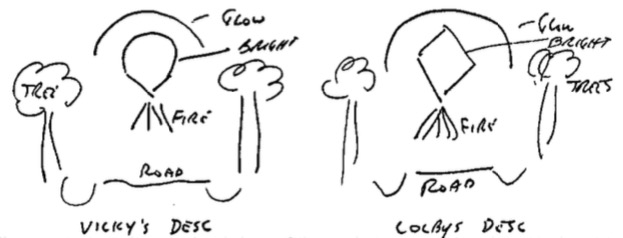
The daughter saw them first. Three brilliant blue lights were chasing each other in a field beside the road, several hundred yards off and possibly as much as half a mile, flying erratically and at high speed around one another. Then the group turned toward the car. She described two of them as about the size of a softball and the third as about baseball size, and said the two that reached the car were slightly different shades of blue, one darker than the other.
One orb crossed the road in front of the vehicle. A second entered the car, travelled across the dashboard and left again. The third, according to both witnesses, entered the mother's left shoulder, moved through her upper chest in what she repeatedly described as a bubble like manner, and exited through her right upper arm. She said it did not travel in a straight line but seemed to negotiate and change direction slightly as it moved through the tissue. She was driving at about 85 miles per hour at the time.
She looked up in time to see a bright blue ball moving away from the car at a distance of about 100 feet, judged it to be the size of a softball, and described it as clearly spherical with sharp outlines. The daughter was certain the car windows were closed and that the radio was not playing. The mother could not afterwards recall whether the windows were up or down.
Both women reported a distortion of time. A segment of the trip that should have taken about 45 minutes seemed to run to about three hours, and both described only a hazy memory of it. The mother glanced at the clock shortly after the encounter and read 10:45 PM, arriving at her destination at about 11:30 PM. The daughter had told her aunt they would arrive at 6:30 PM and was already alarmed at how far behind schedule they were, and at how dark it had become.
The mother felt immediate nausea and a general malaise, and was too frightened to stop driving. The nausea subsided that evening, but the daughter reported that for the rest of the trip any attempt to discuss what had happened brought it back.
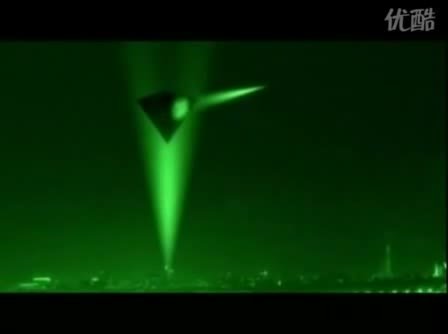
More footage and images of this sighting
What is the official explanation?
There is no official narrative of this event. No police report, aviation authority finding, or government investigation of the sighting itself has been published, and the case entered the public record only as an internal contractor document.
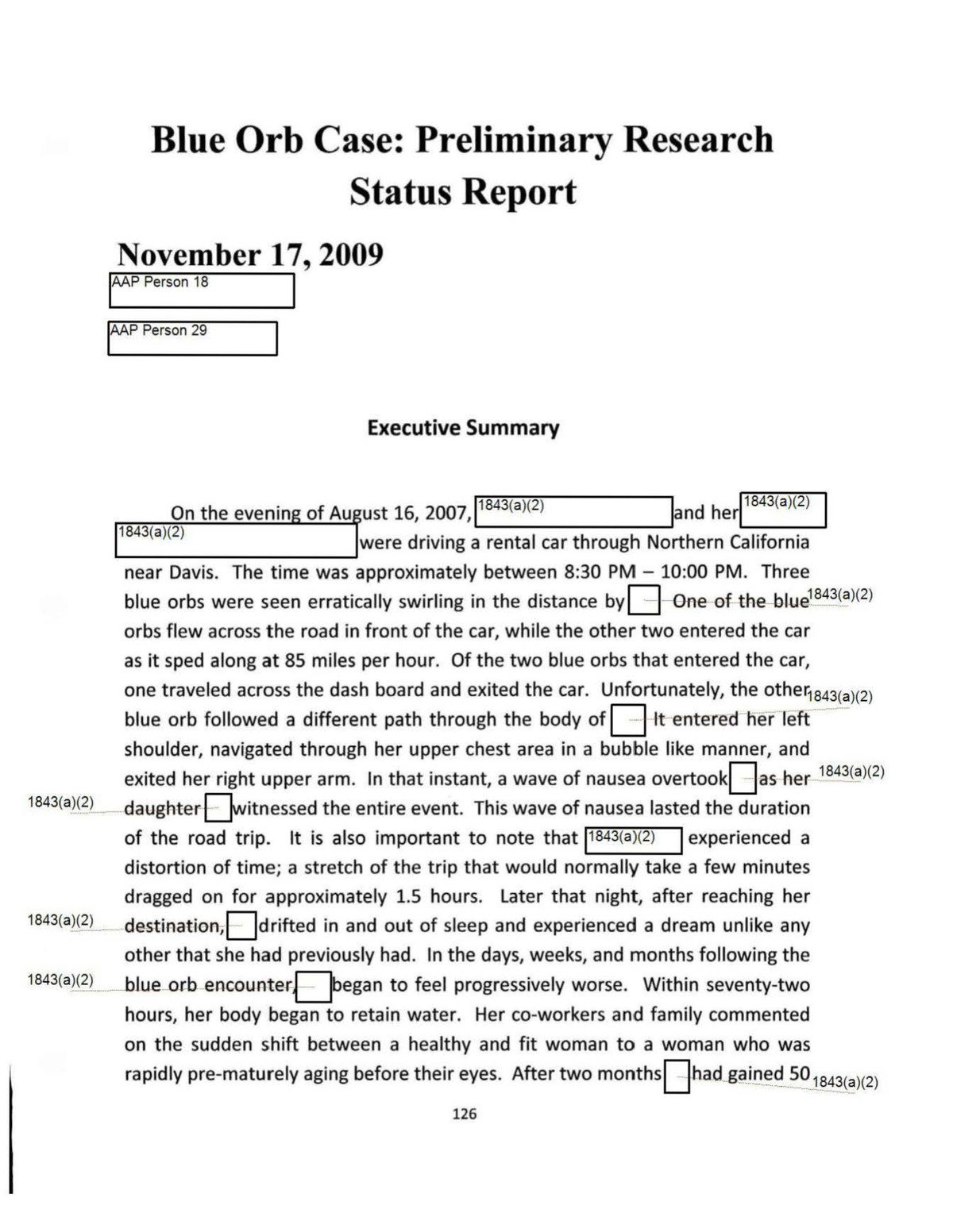
That document is DOW-UAP-D173, the Bigelow Aerospace Advanced Space Studies progress report for 1 to 30 November 2009, released by the United States Department of War on 23 October 2026 in the seventh PURSUE tranche. BAASS was the prime contractor on the Defense Intelligence Agency's Advanced Aerospace Weapon System Applications Program. The report is 155 pages and devotes its final substantive section, beginning at its own page 126, to a document headed Blue Orb Case: Preliminary Research Status Report, dated 17 November 2009 and attributed to two investigators the release identifies only as AAP Person 18 and AAP Person 29.
Every name in the file is withheld. The redaction boxes are marked 1843(a)(2), a citation to the grounds for postponement set out in the Unidentified Anomalous Phenomena Disclosure Act subtitle, which is codified as a note to 44 U.S.C. 2107. Subsection (a)(2) covers unwarranted invasion of personal privacy. The effect is that the witnesses, the investigators' real names, the medical diagnoses and the destination city are all unreadable, while the investigative narrative around them is intact.
The report reaches no conclusion. Its own executive summary states the question plainly, asking whether or not the blue orb incident is the cause of the subsequent illness, and leaves it open. Nothing in the released material records an answer, and no later BAASS report in the tranche returns to the case.
What did the witnesses think it was?
The file is unusually complete about how the witnesses were found, which is worth setting out because it bears on the reliability of the account.
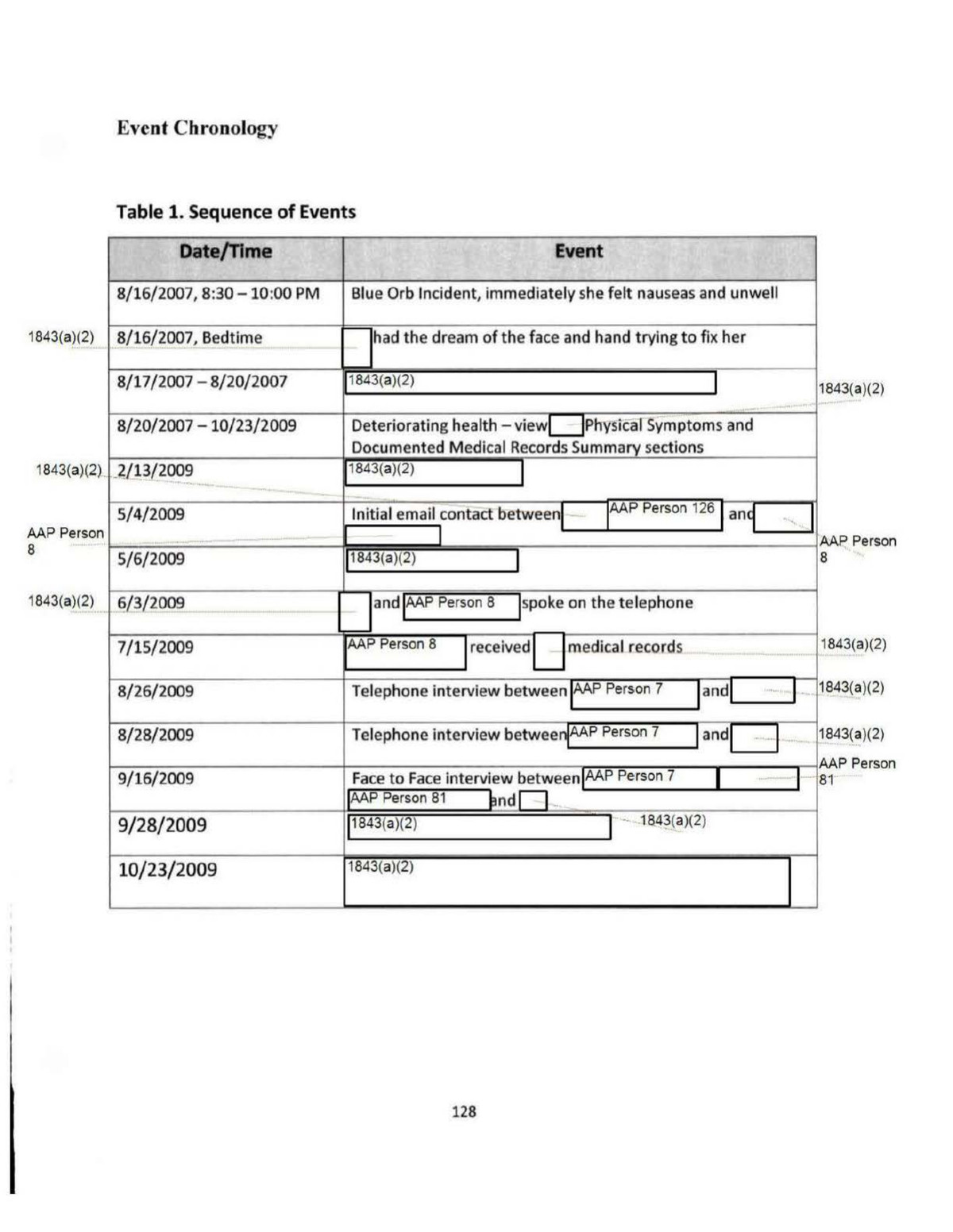
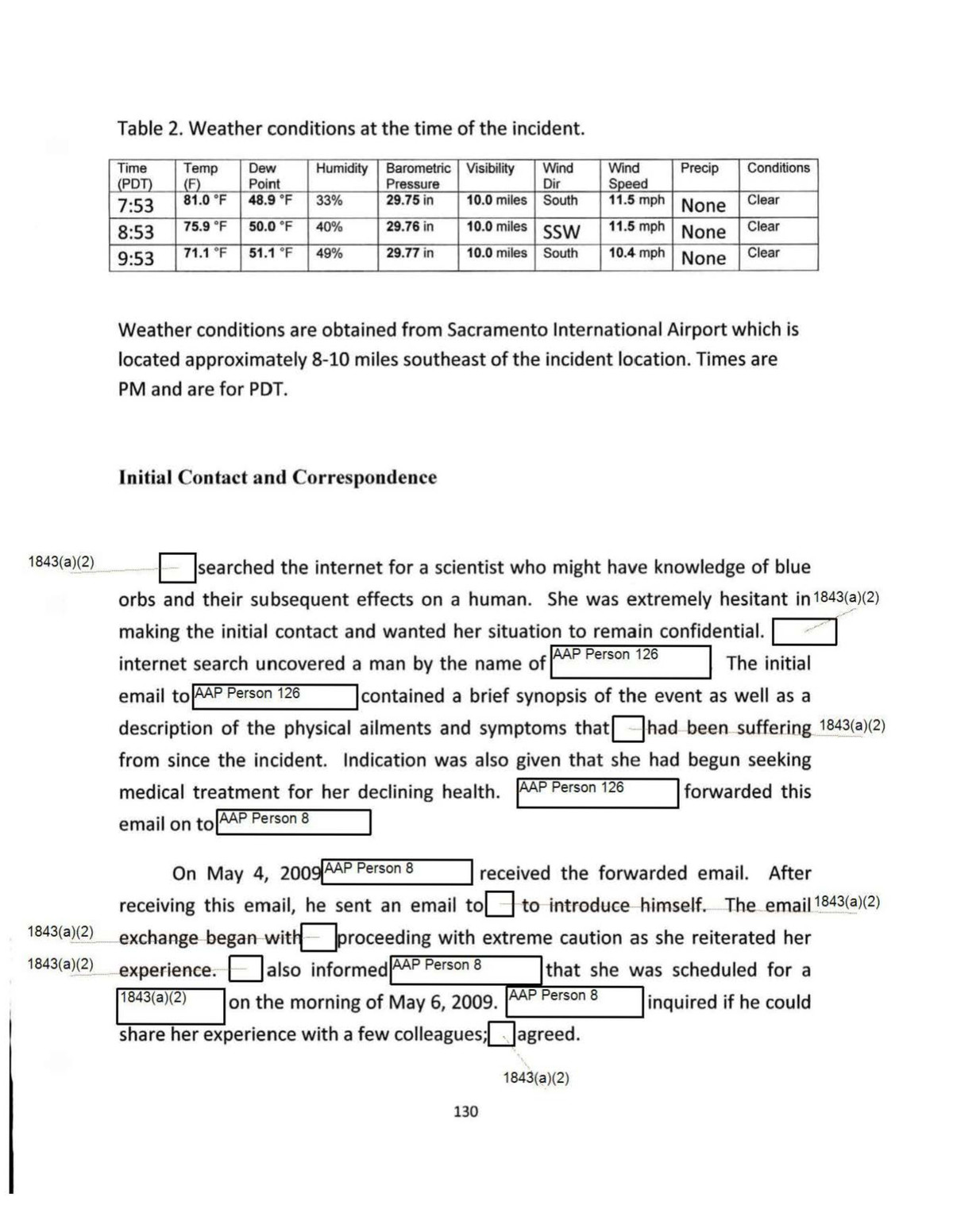
The mother approached the investigators, not the other way round. According to the report she searched the internet for a scientist who might know something about blue orbs and their effects on a person, was extremely hesitant about making contact, and wanted the matter kept confidential. Her first email went to a man the release calls AAP Person 126, who forwarded it on. The receiving investigator, AAP Person 8, read it on 4 May 2009, nearly two years after the event.
The interview record then runs through 2009. A telephone conversation on 3 June, a certified envelope of medical records received on 15 July, telephone interviews on 26 and 28 August, and a face to face meeting on 15 or 16 September. The report notes she had two master's degrees in psychology, one of them in clinical psychology, and needed only a dissertation to complete a doctorate. The investigator who called her on 26 August recorded that she answered every question in an articulate, soft spoken manner and, although she appeared stressed, did not seem overly emotional.
The daughter was interviewed separately on 28 August. Her account matches her mother's on the central points and differs on the details you would expect two people to differ on. She placed the objects at several hundred yards when she first saw them, counted three, and said she herself was not touched. She reported no short or long term effects and said so without prompting, while expressing concern about her mother's health. Her own reading of the event was that it had been accidental, that she and her mother had been in the wrong place at the wrong time, and that had they not been on that road at that moment the objects would simply have passed over it.
The medical claim is the heaviest part of the file and also the most heavily redacted. The mother reported that within 72 hours her body began to retain water, and that after two months she had gained 50 pounds, going from 125 pounds to 180 despite hiring a personal trainer, increasing her exercise and cutting sugar from her diet. She listed a skin rash, hair loss, blurred vision, decreased hearing, osteoarthritis and a general sense of being unwell. The report states that her symptoms appear to follow the path the orb was said to have taken, from the left shoulder across the upper chest to the right upper arm, and reproduces a figure captioned Path of the Blue Orb to show it. It records that she had never smoked, taken drugs or drunk alcohol, that she took no medication before the encounter and had no history of sleep disorder, and that her patients and family remarked on what they saw as premature ageing. One investigator, a physician, suggested the water retention might reflect a fluid and electrolyte imbalance and set out a screening plan. MRIs, bone scans, X-rays and CT scans are described as having failed to pinpoint a diagnosis. The report states that blood tests show a clear line of abnormal results after 16 August 2007, but the results themselves and the diagnoses are withheld.
Her own stated position, quoted twice in the file, was not a claim about what the object was. She said the blue orb left a trail of severe physical damage in her body and that she just wants to get well.
Is the Blue Orb Case: the BAASS Investigation of a Roadside Encounter near Davis, California on 16 August 2007 real? The two-pass assessment
Pass one, the mundane reading. Almost every element of this account has an ordinary candidate, and the file does not argue against them.
Three bright lights moving erratically at a distance over a dark Central Valley field at night are consistent with any number of ground or low aerial sources, and the witnesses' own distance estimate ranged from several hundred yards to half a mile, which is the range at which a driver cannot judge size or distance at all. The apparent approach of the lights toward a moving car is the standard parallax effect of a light source passing close to a fast vehicle on a dark road. The reported speed of 85 miles per hour matters here: at that speed a stationary light to the side of the road sweeps across the field of view very quickly, and the subjective experience is of the light moving rather than the car.
The sensation of something passing through the body is not evidence of an object. It is a somatic experience, reported by one witness, and the daughter who was present reported seeing an orb pass through her mother rather than independently feeling anything. The time distortion is the weakest element: two tired people on a long night drive, who had already lost track of the schedule enough to be alarmed about it before the encounter, are poor clocks, and the report records that both have only a hazy memory of the period they say was stretched.
The medical claim is the part most likely to be coincidence. A 50 pound weight gain with water retention, fatigue, hair loss, skin changes, blurred vision and joint pain is a recognisable cluster for several common endocrine and autoimmune conditions, and the file itself records that the patient was eventually given a diagnosis in early 2009 and underwent a procedure in May 2009, both withheld. The report notes the long delay between the incident and her first documented doctor's visits, explained in the file by a relocation and a lengthy process to secure health insurance. That delay is also, in plain terms, a gap in which an unrelated illness could begin. Attributing the onset to a specific evening because the blood work turns abnormal after that date assumes there was comparable blood work before it, and the released file does not establish that there was.
One verification does hold up, and it is worth recording because it speaks to the quality of the investigation rather than to the claim. The report reproduces a weather table for the evening, attributed to Sacramento International Airport, giving 10 miles visibility and clear skies at 7:53, 8:53 and 9:53 PM with a light southerly wind. Pulling the archived observations for that station and date independently returns the same three observation times, the same 10 mile visibility, the same clear sky, the same southerly direction at 170 degrees, and wind speeds of 9, 10 and 8 knots against the report's 11.5, 11.5 and 10.4 miles per hour, with temperatures within about three degrees Fahrenheit and dew points within about one degree. The small offsets are what you get when two archives round and convert differently. The table in the file is genuine contemporaneous data for the station it names, which means the investigators were doing real work rather than writing up an anecdote. It also establishes that the sky was clear and the visibility unrestricted, so nothing in the account can be attributed to fog, low cloud or lights diffused on an overcast.
Pass two, if the account is accurate. What would be remarkable here is not the lights. It is the combination of an object small enough to be judged at softball size, bright enough to be seen at half a mile, capable of leaving a field and intercepting a car travelling at 85 miles per hour, and able to pass through a sealed vehicle and a human body without injury at the point of entry. No part of that is supported by anything beyond the two accounts, and the file produced no physical evidence, no photograph, no instrument record and no third witness.
The case is tiered Unknown, and the reason is narrow. No official body has ever assessed it, the contractor that did assess it declined to reach a conclusion in the released material, and the archive is not going to supply one on its behalf. What the release actually settles is smaller and more interesting than the claim: that in 2009 a Defense Intelligence Agency contractor was running a documented medical investigation into a roadside orb encounter, with a physician on the team, interview transcripts, a chronology table, a weather check and a request for the witness's medical records, and was reporting it up to the government as programme progress.
The checks that would close it are known and are all withheld rather than absent. The blood panels, the diagnoses given in early 2009, and the identities that would allow any of it to be followed up are present in the file and redacted under 1843(a)(2). A less redacted release, or the witness identifying herself, would make this case testable. Until then the medical half of it cannot be assessed by anyone outside the programme.
Sources
- www.war.gov/medialink/ufo/release-07/documents/DOW-UAP-D173-BAASS_Monthly_Report_November_2009.pdf
- www.war.gov/Portals/1/Interactive/2026/UFO/uap-data.csv
- www.war.gov/UFO/
- mesonet.agron.iastate.edu/request/download.phtml