The Carp "Guardian" Landing Claim
The case opened not with a sighting report but with the mail. This case file covers what witnesses reported, the official narrative, and a two-pass assessment with its evidence tier.
What did witnesses see at Manion Corners?
The case opened not with a sighting report but with the mail. In late 1989 an anonymous sender who signed only as "Guardian" began posting packages to UFO researchers in Canada and the United States, among them Tom Theofanous of the Canadian UFO Research Network (CUFORN). The package claimed that on 4 November 1989 an extraterrestrial craft had come down in a swamp in West Carleton, near Carp and Corkery west of Ottawa, and that a joint United States and Canadian security team had recovered it overnight. Inside were photocopied images of a grey alien, a hand-drawn map marking a triangular crash zone around Almonte and Corkery Roads, forged Department of National Defence documents with passages blacked out, and rambling text about a "Chinese-Grey alien conspiracy."
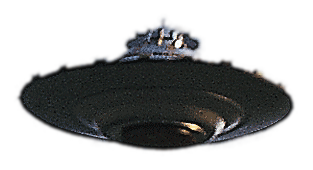
Set against the paperwork was a local resident's account. Diane Labanek, who farmed at Manion Corners, said that on the night of 4 November 1989 she saw an intense bright light pass overhead and head toward the swamp at the south end of her field. She reported a second and more dramatic event on 18 August 1991, while putting her children to bed: what she first took for fires or flares burning at the far end of the field, and beside them a craft sitting on the ground. She said the lights went out "just like you turn off a light-bulb," and that a helicopter hovered over the area afterward. She later drew the object as a silver-grey craft ringed with a zigzag design, resting on three blocks.
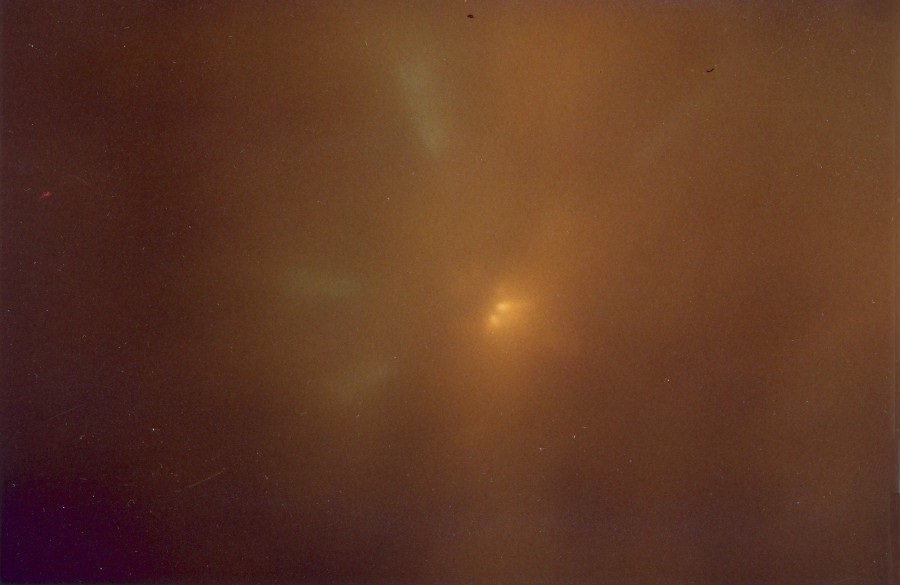
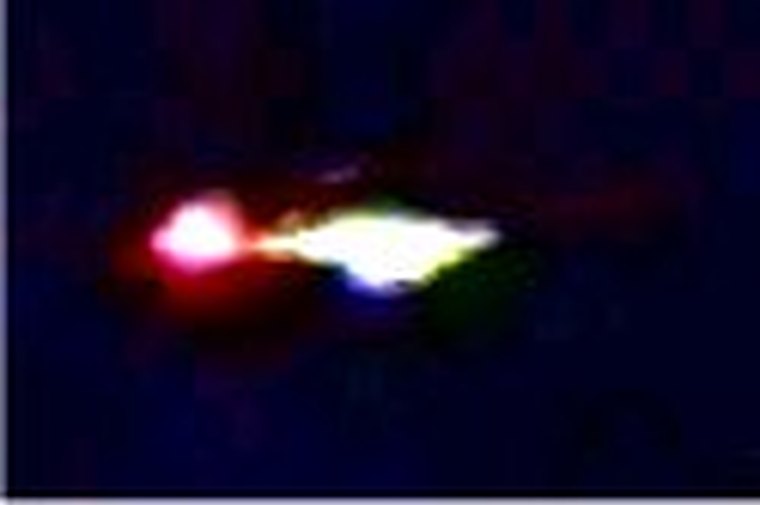
In October 1991 Guardian re-surfaced with a VHS tape, its green label carrying a single thumbprint and the word "Guardian." The footage, shot at night, showed a brightly lit object on the ground next to a cluster of four red flares or fires, with almost no sound except a distant dog bark. A separate three-frame section showed a close-up of windshield wipers crossing a very earthbound vehicle. A few neighbours added pieces. Dr. A.J. Quarington reported television interference and a red light through his window, taking it at first for "red lightning." An anonymous witness called "Sarah" later claimed she had seen two aliens step out of a craft on the road by her house.
What is the official explanation?
There was never a Canadian or American government statement confirming a crash, because the central documents were forgeries. The "Department of National Defence" papers in the Guardian package were fakes, and Canadian investigators treated them as such from early on. The official apparatus that did engage was the Royal Canadian Mounted Police, which opened file 93A-0735 in 1993 after the case reached television. The RCMP framed three questions: whether there was evidence to prosecute anyone under the Aeronautics Act for flying below 500 feet, whether the filmed object was actually an aircraft, and whether it was a genuine UFO. Constable De Haitre handled much of the field work.
The RCMP and Department of Transport experts arrived at a conventional identification. Three D.O.T. specialists concluded the object on the tape was "likely either a Sikorsky S-76 commercial helicopter or else a UH60 U.S. military helicopter," and explained the pulsing light as a masthead light flashing at roughly seven cycles per second "each time a rod passed between the light and the camera." Military sources confirmed that helicopters in the area carried out night-vision-goggle training, flying without lights as close to the ground as possible, and that "red flares will be used as markers." An air-ambulance helicopter operating runs from Carp carried a white strobe that "at night can look blue and can flash several cycles per second much like the one seen on Unsolved Mysteries." Officers also recovered signs on the property reading "DEFENCE CANADA," "KILLING TECHNOLOGY," "TEST AREA" and "NUCLEEAR," the last misspelled with two Es exactly as in the Guardian documents.
The RCMP laid no charges. Constable De Haitre concluded that no charges could be laid against the man suspected of being Guardian. The American investigator who pushed the case hardest, Bob Oechsler, who described himself as a former NASA mission specialist, had collected soil samples analysed at the University of Maryland; the results showed excess titanium but no strontium, which is inconsistent with military red-flare chemistry, and Oechsler held back those results for over a year while continuing to lecture publicly about flare composition. NBC's Unsolved Mysteries aired the case in the 1992 to 1993 season and reportedly spent about $115,000 trying to recreate the footage without success.
What did the witnesses think it was?
Diane Labanek stood by her account of lights and a landed craft across the two events, and her drawing of a zigzag-ringed object on three blocks became part of the file. Quarington and the later anonymous "Sarah," who CUFORN noted passed a polygraph administered by a skeptical examiner, lent corroboration of a kind, although their stories did not line up cleanly with the video or with each other. On the believer side, the case found a determined defender in Dr. Bruce Maccabee, an optical physicist who did frame-by-frame analysis of the tape. Maccabee argued that the MUFON Ontario debunking presented "no convincing evidence to show that either the witness testimony or the video constitute a hoax," that the investigation was "not inept," and that the case "stands or falls on the testimony of the witnesses, not on the video."
The Canadian investigators who actually worked the ground reached the opposite view, and they were not hostile outsiders but UFO researchers. Graham Lightfoot of the Ontario Federation of Agriculture and CUFORN director Harry Tokarz concluded early that "someone was trying to put us on, a hoax." Lightfoot found that ground damage at the alleged landing site matched skunks digging for grubs, and he grew openly critical of Oechsler, accusing him of "tunnel vision" and of building "a case to fit his preconceived storyline." Theofanous, who ran a windshield repair business for seven years, dryly noted that Oechsler's confident reading of the windshield-wiper frames sat oddly against his lack of qualifications on the subject.
The identity question turned on a name. In November 1992 a man named Andy Williams told investigators that his longtime friend Bobby Charlebois had a standing interest in UFOs and had called himself "Guardian" for years. Charlebois's sister reportedly confirmed he was an avid UFO buff, and Diane Labanek acknowledged she had known Charlebois for a while and called him a good friend who visited often. Oechsler then schemed to obtain Charlebois's fingerprint to match it against the thumbprint on the tape label, even arranging for a reporter to deliver UFO material to him, but Charlebois retained a lawyer and the print was never secured.
The dispute
The counter-explanation is detailed and was advanced by the official investigating bodies and by the Canadian UFO researchers who worked the case in person, not by armchair skeptics. The Royal Canadian Mounted Police opened file 93A-0735 in 1993 and, together with three Department of Transport experts, gave the opinion that the object on the Guardian videotape was most likely a Sikorsky S-76 commercial helicopter or a UH-60 military helicopter. They explained the pulsing light as a masthead light flashing at roughly seven cycles per second as a rod passed between the lamp and the camera, and explained the red glows as the red flares the military uses as ground markers during night-vision-goggle training flights, when pilots fly without lights as close to the ground as possible. A nearby air-ambulance helicopter, running between Carp and Kingston, carried a white strobe that at night reads as blue and flashes several cycles per second.
The hoax mechanism around the case is documented, not merely asserted. The case originated in forged Department of National Defence documents, so fabrication is an established fact of the file rather than a theory. RCMP officers recovered painted signs on the relevant property reading "DEFENCE CANADA," "KILLING TECHNOLOGY," "TEST AREA" and "NUCLEEAR," the last misspelled with two Es in exactly the way the word is misspelled in the Guardian documents, physically tying those props to the paperwork. Soil analysis at the University of Maryland found titanium but no strontium, which is inconsistent with genuine military flare composition. A named local suspect, Bobby Charlebois, had reportedly used the alias "Guardian" for years, was described by an acquaintance and a relative as a committed UFO enthusiast, and was a personal friend of the primary witness Diane Labanek, supplying a plain route to the foreknowledge of dates and locations the hoax would have required.
Where the dispute falls short is the core claim, the videotaped object and Labanek's two sightings, and it falls short in three concrete ways. First, the helicopter identification is an expert opinion that the footage is "consistent with" a Sikorsky S-76 or a UH-60, not a positive identification: there is no tail number, no flight log, and no operational record placing a specific aircraft in that field at that time, so the call rests on an unshown method rather than a named cause. Second, the suspect was never confirmed; Charlebois retained a lawyer and his thumbprint was never matched against the print on the tape label, leaving the identification of Guardian inferential, and no rig or light source that was actually filmed was ever recovered. Third, no one has ever confessed or recanted. The recovered forgeries and signs are the wrapper around the claim, not the object on the tape, and optical physicist Dr. Bruce Maccabee still defends the footage on its own merits, citing the object's appearance and the absence of rotor noise. So the dispute is real and detailed and it makes this a strong case near the discredit line, but it closes the peripheral fakery rather than the central anomaly, and the videotaped object plus the steady local witness remain unclosed.
Is the Carp "Guardian" Landing Claim real? The two-pass assessment
Pass one, how this could be entirely ordinary. The mundane reading is strong and unusually specific. The case began with forged Department of National Defence documents, which means fabrication is not a hypothesis but a documented fact of the file. Signs reading "DEFENCE CANADA," "KILLING TECHNOLOGY" and the tell-tale misspelled "NUCLEEAR" were recovered on the property, and the same two-E misspelling appears in the Guardian documents, tying the props to the paperwork. The Royal Canadian Mounted Police investigated under file 93A-0735 and, with three Department of Transport experts, gave their opinion that the filmed object was most likely a Sikorsky S-76 or a UH-60 helicopter, with the pulsing light explained as a masthead light interrupted by a rotating rod at about seven cycles per second, and the red glows explained as the red flares the military uses as ground markers during night-vision-goggle training. A nearby air-ambulance helicopter carried a white strobe that reads as blue at night. A named suspect, Bobby Charlebois, had used the alias "Guardian" for years and was a personal friend of the primary witness, giving a clear route by which a hoaxer would have foreknowledge of dates and locations. The soil chemistry showed titanium but no strontium, which is inconsistent with genuine military flare residue. Veteran Canadian ufologists Lightfoot and Tokarz called it a hoax from the start, and Lightfoot traced ground damage at the alleged landing site to skunks digging for grubs.
Pass two, what the debunk does not close. Strip away the forged paperwork and the painted signs, which are indisputably fake, and you are left with two things the fakery does not touch: the videotaped object and Diane Labanek's two sightings. The helicopter identification is the load-bearing claim against that core, and it is an expert opinion that the footage is "consistent with" a Sikorsky S-76 or a UH-60, not a demonstrated positive identification. There is no tail number, no flight log, and no operational record placing a specific aircraft in that field on that night; the air-ambulance and night-vision-training details establish only that such flights happen in the area, not that one was filmed here. Bruce Maccabee, an optical physicist, did frame-by-frame analysis and held that neither the witness testimony nor the video had been shown to be a hoax, citing the object's appearance, the absence of rotor-stirred smoke and the lack of engine noise as marks against a helicopter. That is a qualified dissent that turns on the imagery itself, and it remains unresolved. Labanek, for her part, stood by her account of an intense light on 4 November 1989 and a landed craft on 18 August 1991 across both events, and her account is independent of the forged mailings.
The verdict is Barely Disputed, and here is exactly why it is not Strongly Disputed. The stronger tier needs a closer aimed at the core claim, and the file has none of the three. There is no confession or recantation by anyone, ever, a point every source and this case's own writeup confirm. No rig was recovered, meaning the actual light source filmed was never found; the props that were recovered, the forged documents and the painted signs, are the wrapper around the claim, not the videotaped object, and the signs were never forensically tied to a named person. And the real-world cause was never positively identified, only judged "consistent with" a helicopter type by the investigating bodies, which is an official assertion without a shown method, with no specific aircraft ever placed at the scene. The named suspect was never confirmed either: Charlebois lawyered up and his thumbprint was never matched against the print on the tape label. The forged-document origin is genuinely damning and pushes this case hard toward the discredit line, but the specific bar for Strongly Disputed, a closer against the core, is not crossed, so the core of a videotaped object plus a steady local witness still stands as unclosed.
Sources
- web.archive.org/web/20240530104910/https://www.ufocasebook.com/carpcanada.html
- www.bibliotecapleyades.net/ciencia/ciencia_flyingobjects34.htm
- www.thinkaboutitdocs.com/1989-the-carp-canada-case-the-guardian/
- westcarletononline.com/doc-to-examine-1989-corkery-alien-landing/
- unidentifiedphenomena.com/incidents/guardian-case-1989/
- alienufoblog.com/guardian-ufo-case-hoax-positive-impact/
More cases from this region: UFO sightings in Canada