The Knowles Family Nullarbor Encounter
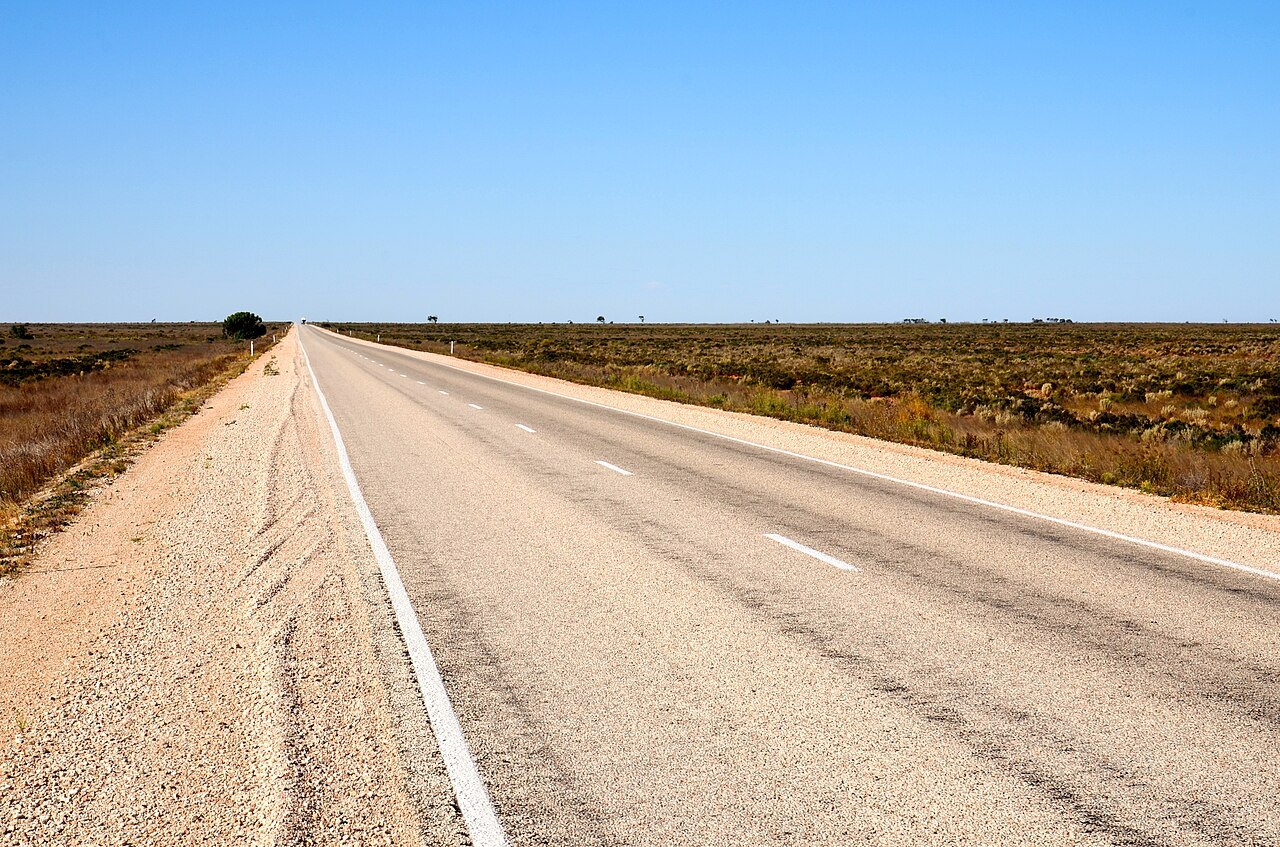
In the pre-dawn dark of 20 January 1988, Faye Knowles, 48, and her three sons were driving east across the Nullarbor Plain in a blue Ford Telstar sedan, with two dogs aboard, on a long haul between Perth and Melbourne. This case file covers what witnesses reported, the official narrative, and a two-pass assessment with its evidence tier.
What did witnesses see at Eyre Highway?
In the pre-dawn dark of 20 January 1988, Faye Knowles, 48, and her three sons were driving east across the Nullarbor Plain in a blue Ford Telstar sedan, with two dogs aboard, on a long haul between Perth and Melbourne. The sons were Patrick, 24, Sean, 21, and Wayne, 18. Sean was at the wheel and Patrick was beside him in the front. At roughly 4:20 am, around 40 km west of the Mundrabilla Roadhouse near the Western Australian border, they saw a light over the road ahead.
Sean described it to the local media as about a metre wide, glowing bright and white with a yellow centre, shaped "like an egg in an eggcup," and he said it appeared and disappeared "after jumping about a bit." His sketch of the shape, a cone-fronted body tapering to the rear with a yellow globe at the source of the light, was reproduced in newspapers at the time. The family said they nearly collided with an oncoming vehicle, made U-turns to look at the light, and at one stage felt it move across to the other car before returning to them.
Then, they reported, the object came down on the roof. The family heard a clunk and a low hum likened to an electrical transformer. Faye said she wound down the window and reached up to the roof, where she felt something warm, soft and rubbery, "like a rubber suction cup," and pulled her hand back covered in fine black dust. Patrick said it felt as though his "brain was being sucked out." Faye said it felt like something was "going into our heads." Grey-black smoke or mist with a foul smell, which several family members likened to dead bodies, filled the cabin. They said their voices slowed and dropped in pitch and that time itself seemed to drag.
The family said the car was lifted off the road, shaken, then forced back down hard enough to burst the rear right tyre. Sean braked to a stop and briefly blacked out. They fled into the roadside scrub and hid in the bushes until the light moved off, then changed the tyre and drove on to the Mundrabilla Roadhouse to raise the alarm.
What is the official explanation?
There was no military or defence inquiry. The case ran through state police and civilian UFO researchers. The family reported first at Mundrabilla and then drove on to Ceduna, where South Australian police took statements and inspected the car. Ceduna police Sergeant James Fennell told United Press International on 21 January 1988 that authorities were taking the report seriously because the vehicle was covered in black ash and its roof was damaged. He said: "I inspected the car when it arrived at Ceduna. The car was covered in a thick coating of black ash and there was ash inside the car. There was slight damage to the roof of the car," and added that the family "were extremely distraught." A second Ceduna officer, Sergeant Fred Longley, said the family were still in a terrible state five hours after the event and remarked that the ash did not match the local sand. Sergeant Jim Furnell described four dents in the roof "as if something had landed on top."
Fennell also told reporters that the Knowles report was not the only one that night. He said police logged four separate UFO reports in the region: the family, a truck driver who said he was followed by a light on the highway, a tuna-spotter aircraft that reported a bright light near the road, and a fishing trawler in the Great Australian Bight that reported a hovering object. Police said they did not suspect a hoax, a point echoed in the Los Angeles Times coverage of 21 January 1988.
The physical evidence was tested repeatedly. A television network that secured exclusive access to the family commissioned a laboratory examination by forensic scientist Monty Luke. His analysis found no evidence supporting the claim that an object had landed, dented the roof or burst the tyre. The black material on the car was reported as mostly iron oxide consistent with residue from worn brake linings, and the near-circular cut on the right rear tyre was attributed to the car being driven a considerable distance on the rim, which would also account for the violent shaking and the acrid smoke. The Australian Mineral Development Laboratory examined ash from the exterior and found only particles of clay and salt, consistent with a vehicle that had recently crossed the Nullarbor. Civilian researchers including Keith Basterfield, Bill Chalker, Ray Brooke and others investigated independently. Samples sent to NASA scientist Dr Richard Haines showed the interior dust differed from the exterior dust, but Haines and later analysts found nothing alien or unusual; the deposit on the front wheel rims was again identified as brake-lining material. In December 1989 meteorologist A.T. Brunt, a former regional director of the Bureau of Meteorology in South Australia, published "The 1988 Nullarbor UFO Mystery, Solved" in The Skeptic, arguing the lights were "refracted images of distant light sources" because the night carried "pronounced temperature inversions."
What did the witnesses think it was?
All four family members held to the same core story for years and never recanted. Faye Knowles told reporters afterward, "I wound down the window and I felt this thing on the roof, all of this smoke stuff started coming into the car, the car was covered in black stuff." She said the light "was a small light and all of a sudden it became big like this, like a big ball," and that "we thought we were dying, then we got out the car and we hid behind a little tree and the bushes and it couldn't find us." She later said she would not turn the lights off at night because she was too scared to sleep. When pressed on whether the car had truly been lifted, the family were careful rather than emphatic; Faye said, "We don't really know, but we think it has been lifted off the road." The family rejected the forensic findings and remained adamant that an egg-shaped object had attacked their car.
The most important corroboration came from truck driver Graham Henley, who was on the same stretch of road at the same hour. He said he watched a strange light in his rear-view mirror for about five minutes, like a strong spotlight or "a big fried egg hung upside down," and saw no car headlights beneath it. At Mundrabilla he and friends looked over the Knowles car and the scene, reporting black ash inside and out that smelled burnt like fine silicon sand, four indents in the roof, the damaged tyre, and skid marks, footprints and tread tracks they felt backed the family's account. Beyond Henley, police cited the independent reports from a second motorist, a tuna-spotter aircraft and a fishing trawler crew, witnesses who were hundreds of kilometres apart and had no reason to coordinate. Colin Norris of the Australian International Information Centre for UFOs found the family wholly sincere, saying, "I believe their experience is very authentic." Among more cautious investigators, UFO Research Queensland concluded only that "something happened, and that the family witnessed an unusual light and were extremely frightened by its effects," while noting the simultaneous regional reports as a sign that something genuinely unusual occurred.
The dispute
The central dispute is that the spectacular elements of the Knowles story have specific natural explanations advanced by named investigators, while the underlying light remains unidentified. The most authoritative skeptical analysis came from A.T. Brunt, a former regional director of the Bureau of Meteorology in South Australia, in his December 1989 article "The 1988 Nullarbor UFO Mystery, Solved" in The Skeptic. Brunt argued the night carried pronounced temperature inversions, the condition that produces superior mirages, and concluded the lights were "refracted images of distant light sources." On a flat, ruler-straight desert highway in darkness, that mechanism can make distant truck headlights appear as a hovering, jumping glow, which matches the family's description of a light that approached but never quite reached them and vanished "after jumping about a bit."
The physical traces, the part that made the case famous, point toward the mundane. A television-commissioned examination by forensic scientist Monty Luke, the Australian Mineral Development Laboratory, and samples assessed via NASA scientist Dr Richard Haines converged on a prosaic picture: the black material was iron-oxide residue from worn brake linings, not anomalous ash, and the surface dust was clay and salt picked up crossing the Nullarbor. The rear right tyre showed a normal high-speed blowout, and the near-circular cut on its casing was attributed to driving a considerable distance on the bare rim, which would also produce the violent shaking and the foul-smelling smoke. The roof dents were judged insignificant, of a kind consistent with a roof rack or tied luggage, with no evidence they postdated the trip. The driver, Sean, said the tyre burst at the instant the object supposedly landed, not after any lifting, and the family conceded they could not be sure the car was ever lifted at all.
Where this falls short of closing the case is the central claim itself. Brunt's article is rhetorically titled "Solved," but it never names or identifies the specific truck or light source whose headlights were supposedly refracted, and it rests on an inversion inferred from regional climatology rather than one measured at that place and hour, so it is an asserted hypothesis without a fully shown method tying it to this event. The dust analyses are stated by the analysts themselves as "consistent with" brake and road dust, a strong negative result against exotic ash but not a single-source positive identification, and Haines noted the interior dust differed from the exterior. The light was also corroborated independently: police logged four separate reports across the region that same night, from the family, a truck driver, a tuna-spotter aircraft, and a fishing trawler in the Great Australian Bight, witnesses hundreds of kilometres apart, and Graham Henley watched a glowing object in his mirror with no headlights beneath it. No family member recanted, and investigators on both sides agreed a deliberate hoax was unlikely. So the dispute strongly dissolves the peripheral physical-trace elements, the lift, the "exotic ash," the tyre and the dents, while leaving the core untouched: a corroborated, unidentified light over a remote highway that the mirage hypothesis fits well but has never positively pinned to a source. On the documented record the case largely stands.
Is the Knowles Family Nullarbor Encounter real? The two-pass assessment
Pass one, how this could be entirely ordinary. The skeptical reconstruction is genuine and it has named scientists behind it. Meteorologist A.T. Brunt, a former Bureau of Meteorology regional director, published "The 1988 Nullarbor UFO Mystery, Solved" in The Skeptic in December 1989 and argued the lights were "refracted images of distant light sources" produced by "pronounced temperature inversions." That is the textbook setup for a superior mirage, the same optical class later tied to the Min Min light, in which distant vehicle headlights below the horizon are lofted and made to float, shimmer and shift ahead of or behind a moving car. On the dead-straight Eyre Highway in the dark, a truck's lights several kilometres off can read as a glowing object that hovers and darts, which fits the family's own account of a light that approached but never quite reached them and vanished "after jumping about a bit." The physical traces, the part that made the case famous, point hard toward the mundane. Forensic scientist Monty Luke found no evidence that any object had landed, dented the roof or burst the tyre, and reported the black material as mostly iron oxide consistent with worn brake-lining residue. The Australian Mineral Development Laboratory found only clay and salt from a dusty crossing. Samples assessed via NASA scientist Dr Richard Haines found nothing alien, and the deposit on the front wheel rims was again identified as brake-lining material. The near-circular cut on the right rear tyre was attributed to driving a long way on the bare rim, which would also produce the violent shaking and the acrid smoke. Sean, the driver, said the tyre blew at the moment the object supposedly landed, not after a lift and drop, and the family themselves conceded they could not be sure the car had ever been lifted at all. Read this way, four exhausted people on an unfamiliar desert road at night frightened each other into turning an anomalous glow into an attack.
Pass two, what survives. The debunk dissolves the legend's spectacular trimmings but does not close the core, and on inspection the closure is thinner than its rhetorical title "Solved" suggests. Brunt's article never names or identifies the specific truck or light source whose headlights were refracted, and he infers the inversion from regional climatology rather than from a measured inversion at that exact place and hour, so the mirage is a probable reconstruction, not a source that was positively pinned to the event. The dust analyses are framed in the analysts' own language as "consistent with" brake and road dust, a strong negative result against exotic ash but not a single-source positive identification, and Haines even noted the interior dust differed from the exterior. Most awkwardly for the prosaic account, the light was not a private experience. Ceduna police logged four separate reports across the region that same night: the Knowles family, a truck driver who said he was followed by a light, a tuna-spotter aircraft that reported a bright light near the road, and a fishing trawler in the Great Australian Bight that reported a hovering object, witnesses far apart with no reason to coordinate. Truck driver Graham Henley independently watched a glowing object in his rear-view mirror for about five minutes with no headlights beneath it. No family member ever recanted, the moderating "we think it has been lifted" is caution rather than a walk-back, and even skeptics did not allege a deliberate hoax. Police said they did not suspect a hoax, a point echoed in the Los Angeles Times.
Weighing both passes: the dramatic core of the legend, a craft that physically seized and lifted a car, is effectively gone. The "ash" is brake dust and road dust, the tyre is an ordinary rim-driven blowout, the dents are trivial, and a plausible optical mechanism covers the floating light. But every one of those findings closes a peripheral physical-trace element, while the notable anomaly is broader: a multi-witness unidentified light with independent corroboration. This lands at Barely Disputed, not Strongly Disputed, because none of the harder closures is present. There is no confession and no recantation, no recovered prop or rig tied to this event, and no positive identification of the specific real-world source of the central light. The mirage is an asserted hypothesis without a fully shown method binding it to this exact place and time, and the dust work is a negative result by its own wording, not a positive ID. The case largely stands as a corroborated unexplained light set against a plausible but unproven natural explanation.
Sources
- www.project1947.com/kbcat/kbnulla.htm
- uforq.org/the-knowles-family-ufo-incident-1988/
- www.skeptic.org.uk/1989/12/from-the-archives-the-1988-nullarbor-ufo-mystery-solved/
- skeptoid.com/episodes/715
- www.upi.com/Archives/1988/01/21/Australian-family-says-UFO-chased-its-car/8141569739600/
- www.latimes.com/archives/la-xpm-1988-01-21-mn-37726-story.html
- www.abc.net.au/news/2018-02-23/curious-adelaide-ufo-sightings-across-australia/9466950
- hauntedadelaide.blogspot.com/2015/03/nullarbor-ufo-sighting-1988.html
- www.museumoflost.com/aliens-on-the-nullarbor/
- web.archive.org/web/20200809055200/http:/www.abovetopsecret.com/forum/thread1126115/pg1
More cases from this region: UFO sightings in Australia