The Jose Antonio da Silva Abduction
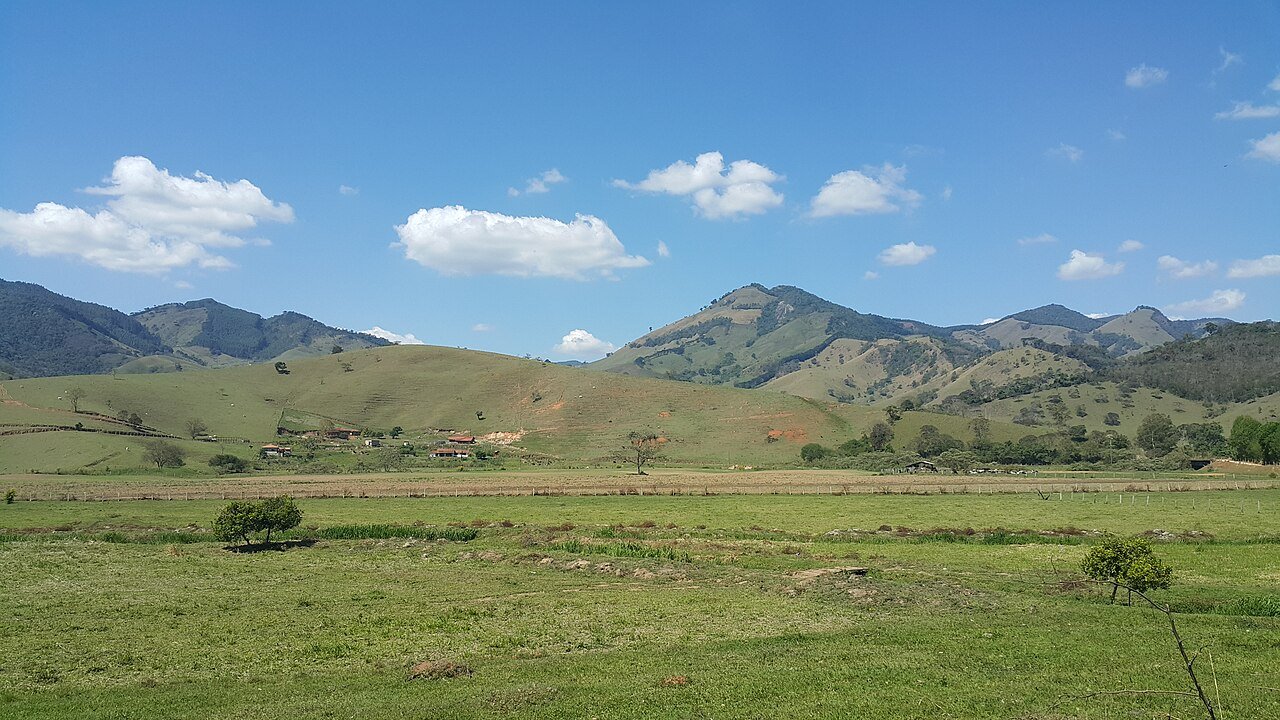
In the afternoon of 4 May 1969, around 3 p.m., Jose Antonio da Silva, a 24 year old soldier in the Brazilian Guards Battalion, was fishing alone at a lagoon at Bebedouro, a spot about 30 miles north of Belo Horizonte in Minas Gerais. This case file covers what witnesses reported, the official narrative, and a two-pass assessment with its evidence tier.
What did witnesses see at Bebedouro?
In the afternoon of 4 May 1969, around 3 p.m., Jose Antonio da Silva, a 24 year old soldier in the Brazilian Guards Battalion, was fishing alone at a lagoon at Bebedouro, a spot about 30 miles north of Belo Horizonte in Minas Gerais. He told investigators he became aware of voices and of figures moving behind him, heard a deep groaning sound, and was hit on the leg by what he described as a burst of fire or light from a partly hidden figure. His leg cramped and went numb and he dropped to his knees at the water's edge.
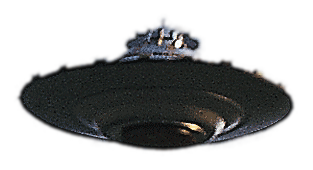
Two beings about 1.2 meters tall, roughly four feet, seized him. He described them as wearing shiny light colored suits with articulated segments at the elbows and knees, and masks that were rounded at the back and square and flat in front, pierced with round holes about two centimeters across for the eyes. They dragged him to an object standing on a nearby dirt road. He described it as a grey upright cylinder with two black lens shaped or platform structures at the top and bottom, each wider than the cylinder itself. Inside was a small grey quadrangular compartment with two grey seats, lit by an intense light he compared to a mercury vapour lamp. The beings fastened his feet and waist with a dry, rough material and put one of their helmets on his head.
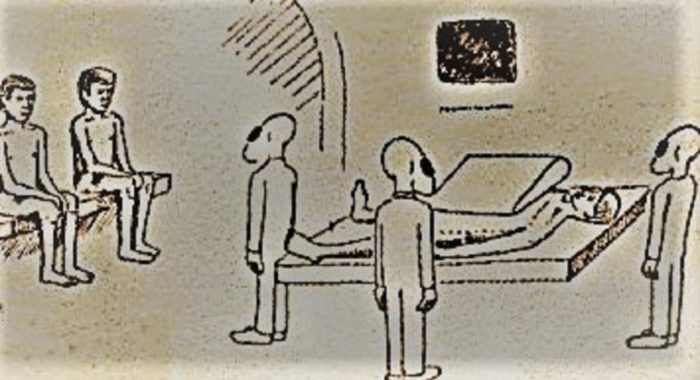
Da Silva said the craft rose and he felt a long flight lasting hours, during which the beings talked among themselves in a language full of rolling R sounds that he could not understand, and the craft seemed to turn on its side for a while. When it landed he was blindfolded and led into a large stone room, a quadrangular chamber with grey walls he estimated at 15 to 20 meters on a side. There he saw between ten and a dozen small hairy beings. A leader confronted him who wore no spacesuit: about 1.25 meters tall, more robustly built than the others, extremely hairy, with thick eyebrows, hair down to his waist and a beard down to his stomach, pale skin, large round green eyes bigger than a human's, and a big nose. Da Silva said the mouths of these beings struck him most: "They looked like fishes' mouths. I didn't see a tooth in any one of them."
On a low shelf he saw the naked bodies of four human men lying face up, one dark skinned, one light brown, and two paler and thinner, one of them with blond hair "like a foreigner." The walls carried drawings of animals such as jaguars, monkeys, elephants and giraffes, of a small town with houses and trees, of the sea, and of vehicles including trucks, cars and a twin engine propeller aircraft. A cube shaped stone object sat a few meters in front of him, with a long slab beside it used like a slate for sketching. The leader drew on the slab and gestured, pointing at sketches of weapons, then at da Silva, then down and up, which da Silva understood as a demand that he help the beings obtain Earth weapons. He gesticulated his refusal. One of the beings offered him a dark green, bitter liquid from a pyramid shaped cavity in the stone cube, which he resisted but eventually drank a little of. They also tried, he said, to get him to take off his clothes, which he refused.
When the leader snatched away the crucifix from the rosary da Silva habitually carried, da Silva began to pray. He then described a bearded figure in a robe or monk's cassock who appeared and spoke to him in Portuguese, giving him a message he was sworn to keep secret, with the beings telling him they would come back for him in about three years. After more quarreling among the beings, he was blindfolded again, taken back aboard, and at the end felt himself dragged and lost consciousness. He woke at dawn near a quarry at Colatina, about 32 km from Vitoria and more than 200 miles east of where he had been fishing. He had been gone four and a half days.
What is the official explanation?
There is no government UFO report on this case. Brazil ran no public investigation comparable to the United States Project Blue Book, and the documentation we have comes entirely from civilian researchers, mediated through the British journal Flying Saucer Review.
The first investigative thread is the one that matters most. Hulvio Brant Aleixo, a psychology lecturer at the Catholic University of Minas Gerais who had founded one of Brazil's earliest UFO study groups in 1954 and acted as a consultant to elements of the Brazilian Air Force, took the case in hand. Aleixo conducted the interviews and examinations and published the principal account, "Abduction at Bebedouro," in Flying Saucer Review in December 1973, with a second part appearing in Flying Saucer Review Vol. 21, No. 3 and 4 in 1975. Aleixo described his article as "a brief account of the interviews and examinations, including data supplied by third parties." A parallel Brazilian investigative line ran through Dr Walter K. Buhler and the Rio research group SBEDV. The earliest English language notice came from Gordon Creighton, the longtime translator and editor at Flying Saucer Review, who first summarized the case from Brazilian press reports in the November to December 1971 issue.
The third party data Aleixo gathered is the closest thing to an official record. Da Silva did not simply walk home with a story. A railway policeman, named in the accounts as Geraldo Lopes da Silva, found him standing in a dazed and peculiar manner beside a railway track, and a station assistant, Emilio da Silva, also dealt with him; both men reportedly accepted that something serious had happened to him. He was taken to the Guards Brigade barracks, where crowds gathered, and according to the accounts he was sent for a medical and possibly psychiatric evaluation, although Aleixo noted that nobody would confirm the psychiatric examination on the record. His family vouched for his character. His father said he had no weaknesses or vices, and he was described as the caretaker of his family, a man of little formal education but settled habits and genuine religious devotion.
Creighton, writing in Flying Saucer Review, did not treat the story as a literal trip into space. He argued that the beings had effectively deceived da Silva, that they "fed this idea into him" through manipulation, and he leaned toward the interdimensional trickster reading that the magazine favored in that period. In other words, the closest thing to an official position from the investigators of record was not "this man visited another planet" but "something real and disturbing happened to this man, and the spacecraft framing may itself be part of the deception." That distinction matters for how the case is weighed.
What did the witnesses think it was?
Jose Antonio da Silva never recanted and, by the investigators' accounts, never sought money or fame from the episode. He returned dehydrated, hungry and frightened, with a swollen right knee where the beam had struck him, three raw open wounds on his neck where the helmet had chafed, marks on his shoulders, constipation, a burning sensation in his eyes and reduced visual acuity that lasted for days. His military identity card was missing, which he attributed to the beings having examined and kept it, while his fishing tackle was apparently duplicated or interfered with. These physical and circumstantial details, and his consistency under questioning, are what persuaded Aleixo and the other Brazilian researchers that he was not simply inventing a tale.
What da Silva himself believed is more complicated than a straightforward "I was taken to another world." He was a devout Catholic, and the part of the experience he held most sacred was the appearance of the bearded, robed figure who spoke to him in Portuguese. He treated that figure as something close to a religious revelation and flatly refused to disclose the message he had been given, declining even to confirm whether he took the figure to be Christ, a saint or someone else, and saying he had been told to keep silent until instructed otherwise, perhaps two to three years later. He showed what investigators called tremendous resistance to questioning on this single point, even while answering freely about the craft, the beings and the corpses.
There is also a corroborating second episode from da Silva himself. He reported that around midnight on 21 May 1969, a little over two weeks after his return, three small beings appeared near his goats, and that this time he refused all contact. He told investigators he had come away convinced that the world was in great danger and that humanity might face intervention by unknown beings. The witnesses who dealt with him on his reappearance, the railway policeman and station assistant, lend independent support not to the contents of his story but to the bare fact that he turned up far from home, injured and severely disoriented, after an unexplained multi-day absence.
The dispute
The dispute is not that anyone identified the craft as a known aircraft or balloon, or produced a confession. It is interpretive, and it comes from inside the research community that documented the case. Three distinct counter-readings exist. First, Gordon Creighton, the Flying Saucer Review editor who first brought the case to English readers, did not accept that da Silva literally traveled in a spaceship; he argued the beings deceived him and "fed this idea into him," treating the spacefaring frame as a deliberate trick by interdimensional entities rather than a record of physical space travel. Second, Jacques Vallee, in Dimensions (Ballantine, 1989, pages 170 to 171), pointed out that the structure of the experience matches a human initiation ordeal almost point for point: confrontation by costumed figures, blindfolding, being led by the arm along a rough route, confinement in a windowless chamber, presentation to a master, testing and questioning, symbols of death, ritual food or drink, and blindfolding again on exit. Vallee did not call it a hoax, but he framed it as something other than a straightforward abduction by extraterrestrials.
Third, Jerome Clark and Loren Coleman, in The Unidentified (1975), read the whole episode through Jungian psychology as a "descent into hell," a symbolic journey into the unconscious rather than an external event. That reading, if accepted, would relocate the experience largely inside da Silva's own mind. It is weakened by two things. Clark himself later disavowed the interpretation, as religious studies scholar David Halperin has documented, and even on its own terms it is a psychological reconstruction, not a demonstration that a specific ordinary cause produced the report.
None of these positions closes the case, which is why it sits in the barely disputed tier rather than the strongly disputed one. There is no recovered hoax prop, no confession, no traced rocket, balloon or aircraft, and no identification of a real world object that da Silva mistook for a craft. The hardest skeptical fact is simply that everything depends on one witness, with only the circumstances of his injured, disoriented reappearance hundreds of miles away as independent corroboration. The unconfirmed report that he was sent for psychiatric evaluation is suggestive but, by the lead investigator's own admission, nobody would confirm it on the record, so it cannot be used to settle the question. The case is genuinely contested, but it is contested by competing interpretations of an unexplained event, and on the evidence it largely stands.
Is the Jose Antonio da Silva Abduction real? The two-pass assessment
Pass one, the ordinary readings. No physical evidence from the craft or the beings was ever recovered, so everything rests on one man's testimony plus the circumstances of his reappearance. The mundane possibilities are real and were raised by serious people. The whole episode could be a fabrication, although the lack of any profit motive, da Silva's limited education, his consistency, and his stubborn refusal to monetize or embellish the sacred parts of it cut against a deliberate hoax. A psychological or dissociative episode is harder to dismiss: a young soldier could have suffered some kind of fugue or breakdown, wandered or traveled by train hundreds of miles over four and a half days, sustained his injuries by ordinary means, and reconstructed the gap with imagery drawn from his Catholic faith and the UFO culture of late 1960s Brazil. The heavily ritualized shape of the account, the blindfolding, the rough journey, the windowless chamber, the master figure, the ordeal and the sacred drink, is exactly what Jacques Vallee flagged in Dimensions (Ballantine, 1989, pages 170 to 171) as the structure of an initiation rite rather than a nuts and bolts spaceflight, and what Jerome Clark and Loren Coleman, in The Unidentified (1975), read as a Jungian "descent into hell," a journey into the unconscious. Clark later distanced himself from that reading, as religious studies scholar David Halperin has documented. None of these readings, though, identifies a specific ordinary cause. No one has produced a confession, recovered any hoax props, or named the real object da Silva supposedly mistook for a craft.
Pass two, if something genuinely anomalous happened. Taken at face value, this is one of the richest and strangest entity and abduction reports on record: a multi-day disappearance with a verified relocation of more than 200 miles, witnessed injuries, lost identification, and a detailed, internally consistent account of hairy sub-humanoid beings, a cylindrical craft, human corpses on a shelf, and a demand for weapons tied to a feared invasion. It predates the Betty and Barney Hill driven American abduction template's saturation of Latin American folklore and contains motifs, the fish mouthed hairy dwarves, the religious revelation, the three year return promise, that do not fit the later grey alien stereotype. The investigators of record did not even agree it was literal space travel; Gordon Creighton argued the beings deceived da Silva and "fed the idea into him," which treats the experience as real but its spacefaring frame as a trick.
The tier is Barely Disputed. The case stands on a single uncorroborated witness, which keeps it well short of Verified Unexplained, and there is a substantive, named counter-reading from credible figures, Vallee's initiation ordeal model, Clark and Coleman's psychological descent, Creighton's deception thesis, and the unconfirmed psychiatric referral. But every one of those is an interpretation of an unexplained event, not a method shown identification of an ordinary cause. No confession, no recovered props, no named real world object or traced cause has ever been produced. Under the rule that a contested psychological reconstruction is not enough for Strongly Disputed, this is the textbook Barely Disputed case: it is contested, but it largely stands on its own evidence.
Sources
- www.davidhalperin.net/jerome-clark-and-loren-coleman-descent-into-hell-and-the-bebedouro-abduction/
- web.archive.org/web/20241202025706/https://podcastufo.com/part-ii-abducted-by-hairy-dwarves-in-brazil/
- web.archive.org/web/20250611221504/https://podcastufo.com/part-iii-abducted-by-hairy-dwarves-in-brazil/
- web.archive.org/web/20250708145433/https://podcastufo.com/part-iv-abducted-by-hairy-dwarves-in-brazil/
- web.archive.org/web/20241202024636/https://podcastufo.com/abducted-by-hairy-dwarves-in-brazil/
- davidpratt.info/ufo4.htm
- www.tall-white-aliens.com/abduction-of-jose-antonio-da-silva/
- www.thinkaboutitdocs.com/abduction-of-jose-antonio-da-silva/
More cases from this region: UFO sightings in Brazil