The Two Bright Contrasts Over the Middle East (PURSUE PR024)
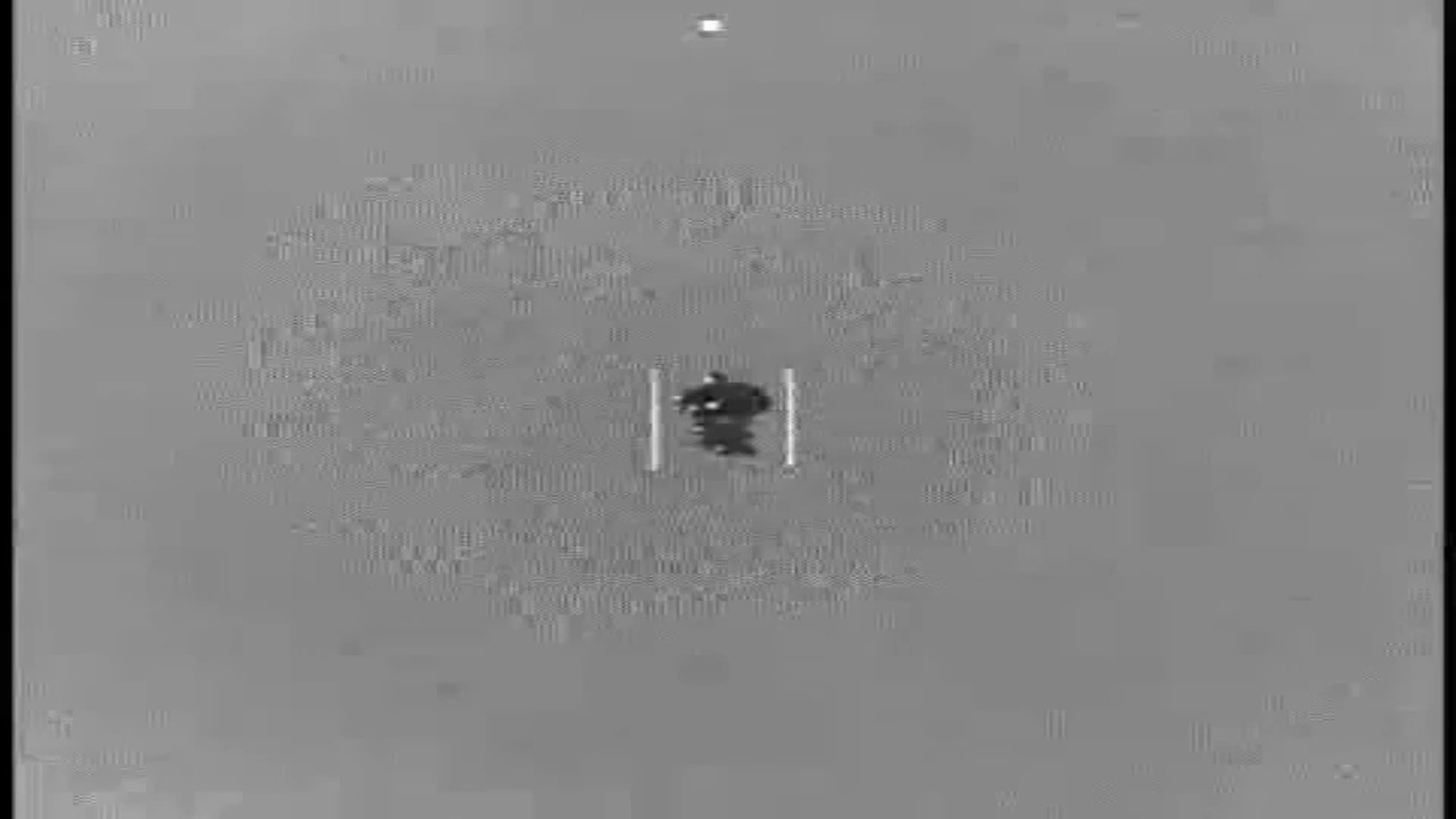
Eighteen seconds of infrared, filed by U.S. Central Command from somewhere in the Middle East in 2023. A dark shape is held in the reticle while two bright objects sweep across the frame and vanish off the right edge, and to the eye it can look like one thing splitting and darting away. AARO published it as DOW-UAP-PR024 on 10 July 2026 and assigned no cause. Analysts suspect the camera's own optics as much as anything in the sky. It is short, strange, and, officially, still unresolved.
What did witnesses see at Middle East?
The footage is short, eighteen seconds of infrared video from a sensor aboard a U.S. military platform in the Middle East in 2023, filed by U.S. Central Command. AARO's frame-level caption walks through it almost second by second. The sensor first focuses on a dark area of contrast and narrows its field of view to zoom in. At the two-second mark two bright areas of contrast transit the frame from left to right; the sensor zooms out to keep them in view, and by five seconds the bright pair exits the right edge. The operator then refocuses on the original dark area of contrast, a reticle closes around it near the center of the frame, and at seventeen seconds the sensor changes its contrast and zoom settings, flashing the whole frame white.
What draws the eye is the choreography: a dark object tracked in the center, and two separate bright objects sweeping past it and out of frame in a couple of seconds. To a viewer it can look as though a single thing suddenly split, changed shape, and shot away, which is why the clip has been described in coverage as an object making a fast, sharp change of motion. The AARO description is more measured, and it is careful to call everything an "area of contrast" rather than a solid body.
What is the official explanation?
The clip is cataloged as DOW-UAP-PR024, one of the nineteen unresolved infrared videos in the fourth PURSUE tranche published at war.gov/UFO on 10 July 2026, submitted through U.S. Central Command. AARO's caption ends with the release's standard disclaimer: readers "should not interpret any part of this description as reflecting an analytical judgment, investigative conclusion, or factual determination." No cause is assigned, and the office does not claim the bright pair and the dark contrast are the same object or related at all.
Independent analysts flagged a likely mundane mechanism. In earlier PURSUE videos the star-like or spiked appearance of a light source turned out to be the camera's own diffraction pattern rather than the shape of anything in the sky, and reviewers of this release cautioned that the bright, fast-moving contrasts here could similarly be sensor and optical effects, or ordinary distant objects, rather than a craft performing a maneuver. That is analysis of the imagery, not an official ruling; AARO left PR024 unresolved.
A companion note added 10 August 2026. This page covers DOW-UAP-PR024 only. The Department has since published two further Middle East records carrying the same bare 2023 label, DOW-UAP-PR136 and DOW-UAP-PR149, in PURSUE Release 05 on 7 August 2026. Those are separate reports from separate video files and they are covered on their own page rather than folded in here, because nothing the Department published would establish that any of these records describe the same incident.
What did the witnesses think it was?
There is no named witness, no radio call, and no human testimony, only the sensor and its operator keeping targets in frame. As with the rest of this batch, the file's weight comes from its provenance: a combatant command recorded it, AARO reviewed it, and it reached a public release still marked unresolved.
The eighteen seconds are enough to see the behavior but not enough to settle it. Two bright contrasts cross and leave in a blink while a dark contrast is held in the reticle. Whether those are three objects, two objects and an artifact, or one object misread across a contrast change is precisely what the footage does not make clear. Short clips like this are where the eye most easily supplies a story the pixels do not actually contain.
Is the Two Bright Contrasts Over the Middle East (PURSUE PR024) real? The two-pass assessment
Pass one, the prosaic reading. Two bright points crossing a thermal frame in a couple of seconds have plenty of ordinary sources: distant aircraft or their exhaust, flares, birds catching heat, or debris passing much closer to the sensor than it appears. The apparent shape and the sudden white flash at the end are strong hints of the sensor's own optics at work; a contrast-and-zoom setting change literally alters how everything in the frame looks, and prior releases have shown spiked, star-like signatures that were pure camera diffraction. The impression of a single object changing shape and darting away can arise entirely from a dark contrast being tracked while two unrelated bright contrasts happen to sweep past. AARO's decision not to characterize it fits a clip too brief and too optically noisy to resolve.
Pass two, the anomalous reading. It is still a U.S. Central Command infrared recording, from an active theater, that survived review as unresolved. If the bright pair genuinely transited at the speed the frames suggest, that is fast, and the coordination between a tracked dark object and two bright objects would be worth explaining. The clip's brevity cuts against certainty in either direction.
The verdict is Unknown. No official narrative exists, the leading prosaic explanations (optical and sensor effects, or distant conventional objects) are plausible but unproven, and AARO has pointedly declined to decide. PR024 is best read as a genuine but ambiguous fragment: eighteen seconds of military infrared over the Middle East that the government released without an answer and that the frames themselves cannot pin down.
Sources
- www.dvidshub.net/video/1014100/dow-uap-pr024-unresolved-uap-report-middle-east-2023
- www.war.gov/News/Releases/Release/Article/4539898/department-of-war-publishes-fourth-release-of-unidentified-anomalous-phenomena/
- avi-loeb.medium.com/highlights-from-the-fourth-uap-data-release-by-the-u-s-government-105a9b2561c7
- thedebrief.org/pentagon-releases-new-batch-of-uap-videos-and-historical-files-but-clarity-remains-elusive/
More cases from this region: UFO sightings in Middle East (undisclosed)