The White Object on the Molokai to Maui Approach
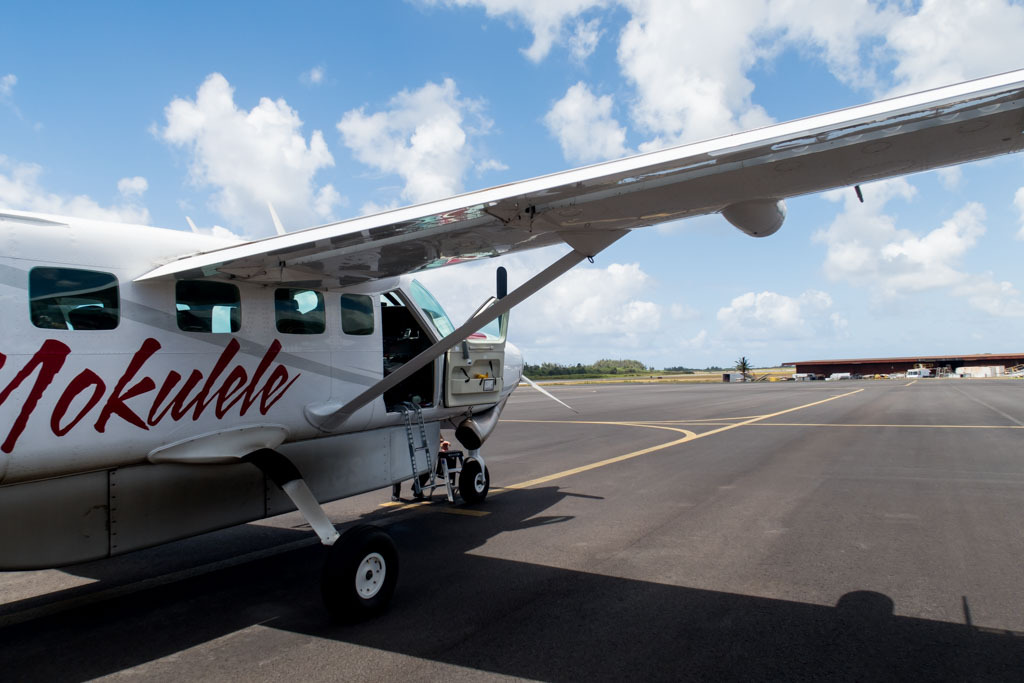
On Thursday 9 July 2026, Molokai resident Tami Dixon boarded a Mokulele Airlines flight from Molokai to Maui. This case file covers what witnesses reported, the official narrative, and a two-pass assessment with its evidence tier.
What did witnesses see at Molokai to Kahului Airport approach?
On Thursday 9 July 2026, Molokai resident Tami Dixon boarded a Mokulele Airlines flight from Molokai to Maui. She was not travelling for pleasure. She was going to the Valley Isle for eye surgery, and by her own account she was already uneasy before the aircraft left the ground. Hawaii News Now reporter Aalii Dukelow, who interviewed her on camera, wrote that Dixon was "already anxious in the air while traveling to the Valley Isle for eye surgery" and that "last Thursday's turbulent flight added to her nerves." The route is one of the shortest scheduled hops in the United States, a few minutes of water and a climb over the Pailolo Channel between Molokai's airport at Hoolehua and Kahului Airport on Maui's north shore, flown by Mokulele on Cessna Grand Caravan single-engine turboprops. It is a small cabin with small windows and a low seat count, and passengers sit close enough to the flight deck to watch the crew work. That detail matters to everything Dixon later described.
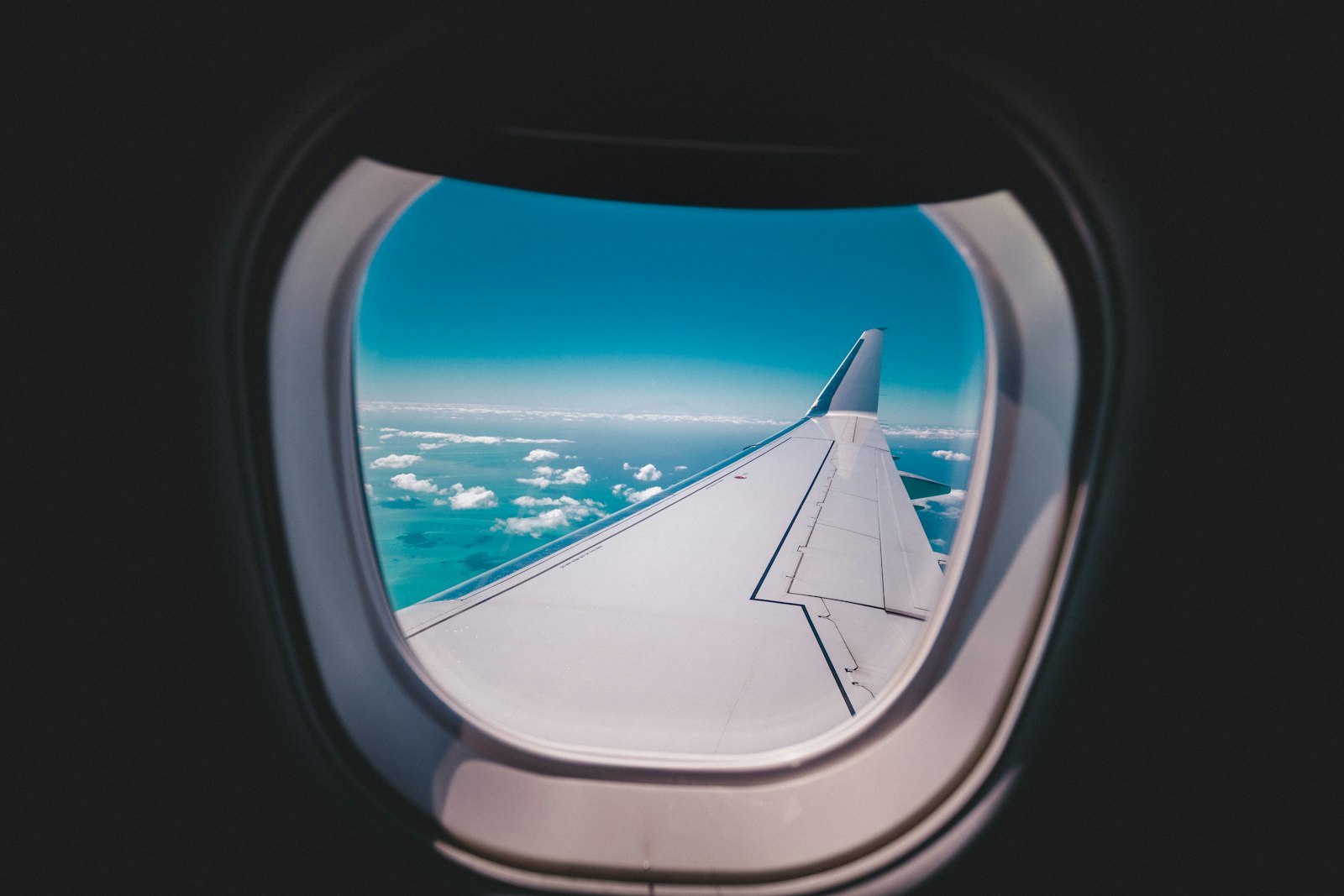
Most of the flight gave her nothing to look at. "When you're in the clouds, you see nothing," she told Hawaii News Now. The sighting happened at the moment that changed. As the aircraft came in toward Kahului, it broke out of the overcast, and in the outlet's wording the object appeared once the aircraft "popped through the cloud." Dixon described what she saw as "a white something." She was explicit about what she believed it was not. The station's own summary of her account states that she saw a white object "she believed was not a bird, nor another plane." Because of how it looked to her, she concluded it was a drone.
Her reaction was immediate and, on camera, unguarded. Dixon said the sight "scared that out of me. Literally scared the **** out of me," with the expletive censored by the outlet. What she reported next is the single most load-bearing claim in the whole case, because it is the only element that involves anyone other than herself. She said the flight crew saw it too and reacted. "Both pilots looked at each other and veered to the right," Dixon described, and she went out of her way to commend them for it: "Oh, fabulous. They both looked at each other and boom, instantly they just turned."
What is not in the record has to be stated as plainly as what is. There is no photograph. There is no video. Nobody on the aircraft, including Dixon, produced a single frame of the object, which for a 2026 sighting in a cabin full of phones is itself a fact worth weighing. There is no flight number, no departure time, no altitude, no heading, no estimate of the object's size, no estimate of its range from the aircraft, and no estimate of how long it was in view. No second passenger has been quoted in any outlet. Neither pilot has spoken publicly, and no crew report of the manoeuvre Dixon describes has surfaced anywhere. The entire evidentiary base of this case is one named woman, on the record, on camera, one week after the fact, describing a few seconds she saw through a small window as her aircraft came out of cloud on final approach. That is a real report from a real named person, and it is also all there is.
What is the official explanation?
There is no official narrative here in the sense that word carries for a Blue Book case or an NTSB investigation. No agency has adjudicated this event, and no agency has been reported as opening a file on it. What exists is one corporate response and one secondhand characterisation of two agencies.
The corporate response came from the airline. Hawaii News Now reported it in a single line: "Mokulele told Hawaii News Now it has no record of any near misses in this case, but Dixon said its pilots acted quickly." The later Express and IBTimes UK versions render the same statement as the company having "no record of a near-miss involving one of its planes that day." That is a statement about the airline's own paperwork, nothing more. It says no crew filed a near-miss report and no incident entry exists in the company's system. It does not say the pilots saw nothing, it does not say the aircraft did not manoeuvre, and it is not a positive identification of anything Dixon saw. Mokulele Airlines is a subsidiary of Surf Air Mobility, and its own site states that it was "Founded in Hawaii in 1994" and "operates a large fleet of 18+ Cessna Grand Caravans on commuter and regional routes," which fixes the aircraft type on this route.
The agency line needs careful attribution, because it is the point where this case is most often misreported. Hawaii News Now, the outlet that actually did the reporting and actually interviewed the witness, does not quote the FAA and does not quote the NTSB at all. The agency claim appears only downstream. IBTimes UK, in a piece by Briane Nebria published 26 July 2026, states that "The Federal Aviation Administration and the National Transportation Safety Board both said they could not confirm that any other aircraft or registered craft were in the area at the time." The Express version syndicated through AOL on 25 July 2026 carries the same sense. That is a paraphrase published by aggregators, not a direct agency statement with a named spokesperson, and it should never be upgraded into one. Read at face value it is also a null result rather than a finding: it says nothing correlated, not that nothing was there.
Two federal databases were checked directly for this event and both came up empty, which is itself a documentable fact. The FAA's Accident and Incident Data System, the public preliminary reporting query at asias.faa.gov, covers a date range of 1978 to 2026 with 118,996 events, but its most recent data freeze is dated 8 June 2026 with a load date of 3 July 2026. A 9 July 2026 event could not appear in it yet even if one had been filed, so its silence proves nothing either way. The NTSB's aviation query and CAROL platform cover "civil aviation accidents and selected incidents that occurred from 1962 to present within the United States, its territories and possessions," and no Mokulele or Southern Airways Express entry for Hawaii in July 2026 surfaced. A momentary avoidance manoeuvre with no damage and no injury would not normally generate an NTSB docket regardless, so again the absence is expected rather than telling.
On the airspace, the sighting happened on the approach into Kahului, which is Class C, tower-controlled, with Maui Tower on 118.7 and approach split between 119.5 south and 120.2 north, serving a primary runway 02/20 of 6,998 by 150 feet at 55 feet MSL. Kahului Airport is owned and operated by the State of Hawaii Department of Transportation, Airports Division, and its official page describes it as "the primary airport on the island of Maui." Uncrewed aircraft in that surface area require air traffic authorisation, which is the exact point the drone operators interviewed by Hawaii News Now were making. No drone operator, film production, agency, or hobbyist has claimed responsibility for anything over the Kahului approach that day, and no follow-up story in any Hawaii outlet has appeared.
What did the witnesses think it was?
Tami Dixon did not report a saucer, a light, or a craft. She reported a drone, and she reached that conclusion herself from the object's appearance. Hawaii News Now put it directly: "Because of how the object looked to her, Dixon believes it was a drone." That is an unusually modest interpretation for a witness who has just been badly frightened, and it is worth noting that she volunteered the mundane explanation rather than the exotic one. Her ruling out of a bird and another aircraft was equally her own call, made in the moment and repeated on camera a week later.
Her other conviction was about the crew. Dixon believed both pilots saw the object and reacted to it, and she was emphatic and complimentary about it rather than accusatory. She praised the response twice, calling it fabulous and describing a simultaneous exchange of looks followed by an immediate turn to the right. She is not making a safety complaint against the airline. She is not alleging negligence, she has not sought compensation in any account published, and she has no visible motive beyond having been frightened and wanting to say so.
There is no corroborating witness. That has to be stated flatly. Neither pilot has been named or quoted, no other passenger has been found by any outlet, and the airline's position is that nothing was reported internally. The Grand Caravan carries a handful of passengers, so the pool of potential corroborators is small to begin with, and one week between the flight and the broadcast is enough time for a short unremarkable-seeming moment to go unremarked by everyone else aboard.
The only expert voices in the record are drone professionals, and they were brought in to discuss airspace rules rather than to assess the sighting. Timo Sullivan, founder of Aloha ʻĀina Drones, a Hilo-based conservation and agriculture drone operator whose own site describes him as a global expert in using drone systems against invasive species, framed the rules as lanes on a road: "The FAA establishes very clear guidelines of where aircraft can fly. Kind of like on a highway, you have your own driving lane, right? So if everyone follows the rules and it's pono, they should never actually interact or you should never have one car or aircraft entering another car's lane." Gabe Hanohano of Hawaii Pacific Drone Solutions made the case for local operators being careful: "We are very fortunate to fly in Hawaii, considering how unique our airspace is with military bases and airports. We're lucky that I believe our people here are very cognizant of our environment and surroundings." Neither man says he saw anything, neither analysed the sighting, and neither endorses or rejects Dixon's drone interpretation. Their contribution is a statement about what should not happen, which is an argument against a drone being there, not evidence that one was.
Is the White Object on the Molokai to Maui Approach real? The two-pass assessment
Pass one, how this could be entirely ordinary. The witness's own explanation is the leading candidate and it is a mundane one. A drone over the Kahului approach would be illegal without authorisation but it would not be extraordinary, and the base rate is not small: FAA public records logged 601 drone sightings near United States airports in the second quarter of 2026 against 320 in the first quarter, with the agency noting that on average more than 100 drone sightings are reported near airports each month. Nothing about a white multirotor near an island airport requires anything unusual. The second candidate, which Dixon rejects but which is not hers to rule out from where she was sitting, is a bird. White seabirds are abundant over Maui's north shore, and a bird is the single most common source of close-range white objects seen from aircraft. A passenger looking through a small side window in the second or two after breaking out of cloud, at an object with no reference points, is in the worst possible position to distinguish a bird from a machine. Third is cloud itself: a torn wisp of scud passing the window at closing speed as the aircraft exits an overcast reads as a fast white shape moving in the wrong direction, and this happens constantly. Fourth is another aircraft or debris, though the approach is tower-controlled Class C and other traffic would ordinarily be known. Fifth, and running underneath all of the others, is misjudgement of size and range, which is severe and well documented for objects seen from a moving aircraft with nothing to scale them against. A white thing two hundred feet away and a white thing two miles away look identical through a Caravan window.
The context loads the ordinary side further. The aircraft was a small single-engine turboprop on a short hop, the flight was turbulent, and the witness says twice that she was already anxious. There is no image at all, in 2026, from a cabin of people carrying phones. And the airline has no record of the event. The one element that resists all of this is the crew reaction. Cloud and birds do not usually make two pilots exchange a look and roll right. If that manoeuvre happened as described it is the strongest thing in the file, because it means two trained observers with an unobstructed forward view reacted to something. But it is reported by one passenger, from behind, a week later, and a Caravan on approach in turbulence banks right for many ordinary reasons, including a routine correction onto final that a frightened passenger would naturally read as evasive.
Pass two, if it was not any of that. The honest answer is that this case does not carry enough to say. There is no material to analyse, no instrument data, no radar, no photograph, and no second voice. If Dixon saw exactly what she describes, the most likely real object remains the one she named, an unregistered drone operating illegally inside Kahului's Class C surface area, which would be a genuine aviation safety story and not a UAP one. Anything beyond that is unconstrained by evidence, and this archive will not decorate a single-witness report with speculation it cannot support.
One more thing deserves recording, because it is the clearest thing in the file. This case is a textbook example of how a modest report inflates as it travels. Hawaii News Now, the outlet that did the work, headlined it "Mokulele passenger claims white object approached plane mid-flight," used the word "claims," attributed everything to Dixon, and quoted no agency. Ten days later the same material was running in British and syndicated outlets under headlines about a flight swerving to avoid a mysterious white object, with the phrase near-miss adopted as description rather than as the airline's denial, an FAA and NTSB non-confirmation appearing that the original never carried, and the expletive Hawaii News Now censored replaced by a word nobody has confirmed she used. Not one new fact was added at any stage. Only the framing changed. Readers meeting this case through the aggregate version are reading a story the primary source never told.
On tiering: no official narrative exists, no agency has adjudicated the event, no counter-explanation has been demonstrated by anyone, and no method-shown identification of the object has been offered. The airline's position that it has no record of a near miss is a statement about its own filing system, not an identification, and it does not qualify as a dispute in this archive's sense. Equally, there is nothing here that would let anyone call the object unexplained in a documented way, because nothing was documented. The case stands exactly where it started, on one named witness's testimony and the airline's shrug. Tier: Unknown.
Sources
- www.hawaiinewsnow.com/2026/07/16/mokulele-passenger-claims-white-object-approached-plane-mid-flight/
- www.ibtimes.co.uk/ufo-sighting-over-hawaii-flight-swerves-avoid-mysterious-white-object-airline-denies-claim-1810600
- www.aol.com/articles/mysterious-white-object-bursts-clouds-220100000.html
- www.mokuleleairlines.com/
- skyvector.com/airport/OGG/Kahului-Airport
- airports.hawaii.gov/ogg/
- airports.hawaii.gov/mkk/
More cases from this region: UFO sightings in United States