The Ubatuba Magnesium Fragments
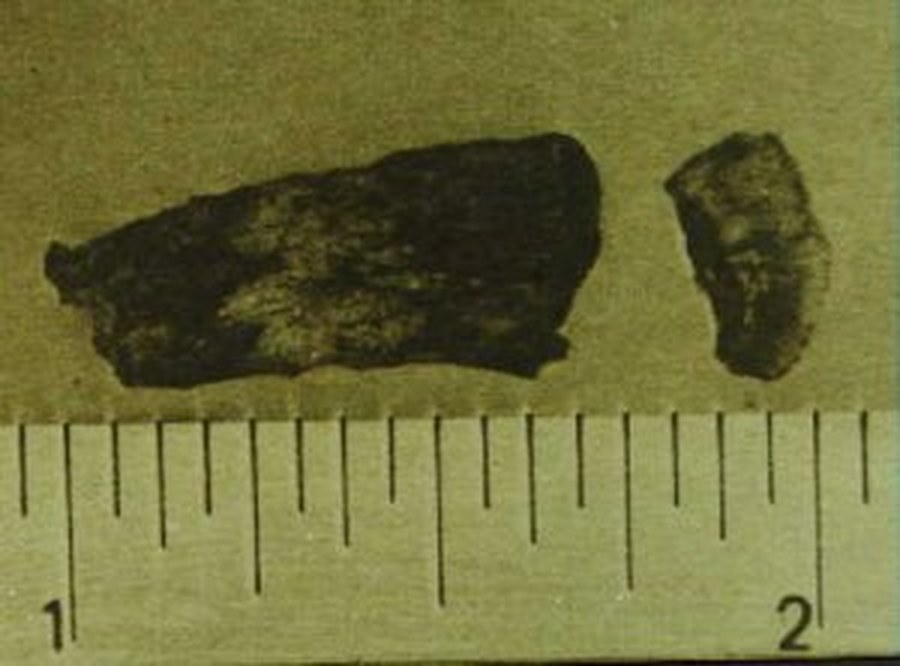
There is no clean, named eyewitness to the Ubatuba event. This case file covers what witnesses reported, the official narrative, and a two-pass assessment with its evidence tier.
What did witnesses see at Ubatuba?
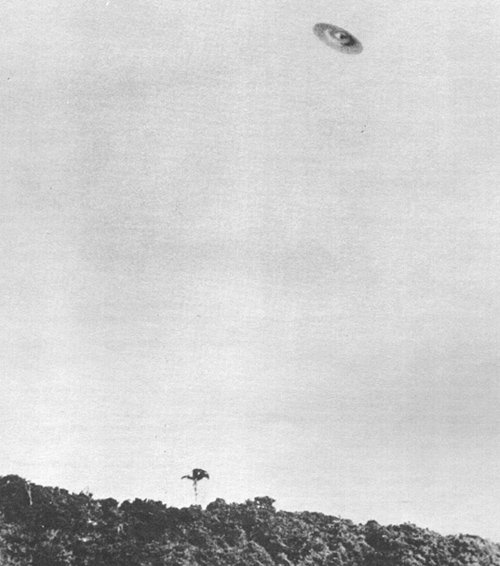
There is no clean, named eyewitness to the Ubatuba event. Everything traces to a single anonymous letter received in early September 1957 by Ibrahim Sued, the society columnist for the Rio de Janeiro newspaper O Globo, and printed in his column on 14 September 1957. The correspondent's signature was illegible, and he was never identified or located. He wrote, in the translation reproduced in the Aerial Phenomena Research Organization (APRO) bulletins and in Coral Lorenzen's books, "I was fishing together with some friends near the town of Ubatuba, Sao Paulo, when I saw a flying disc. It approached the beach at unbelievable speed, an accident seeming imminent, in other words, a crash into the sea. At the last moment, however, when it was about to strike the water, it made a sharp turn upwards and climbed up rapidly in a fantastic maneuver. We followed the spectacle with our eyes, startled, when we saw the disc explode in flames. It disintegrated into thousands of fiery fragments, which fell sparkling with magnificent brightness. They looked like fireworks, in spite of the time of the accident, at noon."
The writer said most of the fiery pieces fell into the sea, but a number of small pieces landed close to the beach, where he and his friends picked up a large amount of material that was "as light as paper." He enclosed a small sample with the letter and added that he did not know anyone he could trust to analyse it. That is the entire account of the sighting itself. No second witness to the noon explosion ever came forward, no other fisherman was named, and the beach was never tied to a specific date beyond "in early September." What survives is not a sighting in the usual sense but three dull-gray metallic fragments and the claim attached to them.
When the Rio physician Olavo T. Fontes, the Brazilian representative of APRO, examined the samples in Sued's presence, he described three irregular, strongly oxidized pieces. One was "shot through with almost microscopic cracks, always longitudinal," with a large fissure running through nearly two-thirds of its length "as if that piece had been disrupted under the action of some force." All three carried a thin, dry, whitish powder that could be displaced with a fingernail and that Fontes compared to "the whitish powdered cinders on a chunk of burned charcoal, as if the fragments had been scorched by some fire or were damaged by too much heat." That physical description, and the metal itself, became the whole of the case.
What is the official explanation?
The Ubatuba fragments became the most-tested piece of alleged UFO "physical evidence" of the era, and the official record is essentially a chain of laboratory results. Fontes first had a sample analysed at the Mineral Production Laboratory, a division of the Brazilian Agricultural Ministry's National Department of Mineral Production. After chemical, spectrographic and X-ray tests the laboratory reported the material was "magnesium of a high degree of purity," with no other metallic elements detected. The chemist who ran the spectrographic work, Luisa Maria A. Barbosa, reported that "not even the so-called trace elements usually detected" were apparent. A second spectrographic analysis by a former laboratory employee, Elson Teixeira, the Brazilian Army's own analysis, and X-ray diffraction work at the department's Laboratory of Crystallography all reached the same headline result: pure magnesium. One sample was reported to have a density of 1.866, against 1.741 for ordinary terrestrial magnesium. The first and largest sample was entirely consumed by this Brazilian testing.
The case then passed to the United States government's only formal scientific study of UFOs, the Air Force-funded University of Colorado project, the Condon Committee. In 1967 investigator David R. Saunders brought the surviving fragments to the attention of physical chemist Roy Craig, and APRO surrendered a piece. In February 1968 Craig had it analysed by neutron activation at the National Office Laboratory of the Alcohol and Tobacco Tax Division of the Internal Revenue Service, where analyst Maynard J. Pro measured the impurities in parts per million: manganese 35, zinc 500, chromium 32, barium 160, and strontium 500. The Condon Report concluded the "claimed UFO fragment is not nearly as pure as magnesium produced by known earthly technology prior to 1957, the year of the UFO report." Crucially, a check of Dow Chemical's metallurgical records showed Dow had made experimental magnesium-strontium batches since at least 25 March 1940, including a 700-gram batch with nominally the same strontium concentration as the Ubatuba sample, with the strontium uniformly distributed in a way that indicated deliberate addition during manufacture. Dow's own metallurgical laboratory reached the same conclusion. The Condon Report's verdict was that the fragments "do not show unique or unearthly composition" and could not serve as valid evidence of an extraterrestrial vehicle.
What did the witnesses think it was?
The people who believed in the case were the investigators, not a crowd of witnesses, because there were no public witnesses to believe. Olavo Fontes, the APRO investigator who first handled the samples, concluded the magnesium "represents something outside the range of present-day technological development in earth science" and that the pieces were "fragments of an extraterrestrial vehicle which met with disaster in the earth's atmosphere, as reported by human beings who witnessed the catastrophe." APRO's director Coral Lorenzen took the strongest line. In her March 1960 bulletin and in a letter to the Pentagon's UFO spokesman Air Force Major Lawrence J. Tacker, she declared APRO held "the physical evidence which the United States Air Force denies having been able to acquire," that it was "a portion of an extraterrestrial vehicle," and that "the most advanced laboratory tests indicate that the residual material could not have been produced through the application of any known terrestrial techniques."
That conviction survived the Condon Report inside the UFO research community, partly because APRO argued the Colorado sample was never the same material the original purity claim rested on. APRO protested that "the sample submitted to the University of Colorado was not the same fragment for which unusual property was claimed, it having been consumed by tests performed in Brazil." APRO's own consultant, University of Arizona metallurgical engineer Walter W. Walker, working with Robert W. Johnson, head of the Advanced Materials Division at Materials Research Corporation in Orangeburg, New Jersey, reported the material "had undergone a directional crystal growth type of manufacture" and that "the process was unknown when the fragments were recovered." Walker's own later verdict was carefully hedged. In 1992 he wrote that surviving samples two and three appeared less pure than triple-sublimed terrestrial magnesium, that the chemical analyses had not verified extraterrestriality, and that "considering the poor pedigree of the Ubatuba physical evidence, a hoax cannot be ruled out, though nothing unequivocally identifying the material as terrestrial was found either." He closed: "after all these years, I consider the Ubatuba magnesium fragment as unusual material of still unknown origin." On the question of corroborating witnesses, the Sao Paulo physician Pierre Kaufmann investigated and found the only documented aerial incident in the region in 1957 was a DC-3 crash, with no trace of the alleged noon explosion at all.
The dispute
The dispute is specific and well-documented. The Ubatuba case rested entirely on one claim: that the recovered metal was magnesium of an impossible, trace-element-free purity that no 1957 terrestrial technology could produce. That claim came from the 1957 Brazilian Mineral Production Laboratory work reported by chemist Luisa Maria A. Barbosa and was amplified by APRO director Coral Lorenzen, who told the Pentagon the material "could not have been produced through the application of any known terrestrial techniques." Every later, better-instrumented analysis contradicted the purity claim. Physical chemist Roy Craig, working for the Air Force-funded University of Colorado (Condon) project, had a fragment analysed by neutron activation in February 1968 at the National Office Laboratory of the Alcohol and Tobacco Tax Division, where analyst Maynard J. Pro measured real impurities, including zinc at about 500 ppm and strontium at about 500 ppm. The fragment was, in the report's words, "not nearly as pure as magnesium produced by known earthly technology prior to 1957."
The decisive piece of the counter-explanation is a positive identification of an ordinary source for the metal's most-cited feature. A check of Dow Chemical's metallurgical records showed Dow had produced experimental magnesium-strontium batches since at least 25 March 1940, including a roughly 700-gram batch with nominally the same strontium concentration found in the Ubatuba sample, and Dow's laboratory found the strontium uniformly distributed in a way that indicates deliberate addition during manufacture. In other words, the strontium signature presented as exotic matched a known, pre-1957, terrestrial product. Isotopic studies then closed off the extraterrestrial reading from another direction. Lee and Papanastassiou at Caltech in 1976 found magnesium consistent with normal terrestrial fractionation; Lorin and Havette at the University of Paris in 1986 found by ion microprobe that the isotopic composition differed from normal terrestrial magnesium by less than 0.2 percent; and the 2017 to 2018 high-resolution ICP-MS work published in 2022 by Powell, Swords, Rodeghier and Budinger through the Scientific Coalition for UAP Studies again found the magnesium isotope ratios within terrestrial limits.
The reason this is Barely Disputed and not Strongly Disputed is that the case has never been positively closed. There is no confession, no recovered hoax apparatus, and no positive identification of a specific manufactured object or event that produced these particular fragments. Pierre Kaufmann's check found no aerial incident at Ubatuba in 1957 except an unrelated DC-3 crash, which weakens the sighting but does not prove fabrication. APRO's own metallurgical consultant Walter W. Walker, who might have been expected to defend the case, ended at "unusual material of still unknown origin" and conceded that "a hoax cannot be ruled out, though nothing unequivocally identifying the material as terrestrial was found either." The 2022 SCU study left the trace-element isotope ratios inconclusive. So the extraordinary purity claim that made the case famous has been disproved, and a credible terrestrial source for the metal has been identified, yet the fragments themselves remain formally unexplained rather than demonstrably faked. That is the textbook profile of a case that largely stands while its headline claim does not.
Is the Ubatuba Magnesium Fragments real? The two-pass assessment
Pass one, how could this be entirely ordinary. The case has unusually weak provenance for something so famous. There is no identified witness, no date for the explosion, no second account, and no physical trace of an aerial event beyond an anonymous letter that arrived with the metal already in hand. That alone makes a hoax or a misattribution easy to construct: anyone with access to fairly pure magnesium could mail fragments and a dramatic story to a society columnist. On the metal itself, the original Brazilian claim of impossible, trace-free purity did not survive better instruments. The Condon Committee's neutron activation work measured real impurities in parts per million, including strontium at about 500 ppm, and a check of Dow Chemical records showed Dow had produced magnesium with the same uniformly distributed strontium content as early as 25 March 1940. That is a positive identification of an ordinary terrestrial source for the very feature that was supposed to be unearthly. Later isotopic work reinforced it: Lee and Papanastassiou at Caltech in 1976 found the magnesium consistent with fractionation of normal magnesium, Lorin and Havette at the University of Paris in 1986 found by ion microprobe that the isotopic composition differed from normal terrestrial magnesium by less than 0.2 percent, and the 2017 to 2018 high-resolution ICP-MS work published by Powell, Swords, Rodeghier and Budinger through the Scientific Coalition for UAP Studies in 2022 again found the magnesium isotope ratios fell within terrestrial limits. The surface oxide intrusion and the white magnesium hydroxide coating are consistent with hot magnesium falling into seawater. Incendiary or pyrotechnic magnesium is an obvious mundane candidate.
Pass two, if real, what is it. If the letter is honest, witnesses saw a disc-shaped object explode at noon over the Ubatuba shore and shower the beach with paper-light burning fragments, and the recovered metal is debris from a structure made of nearly pure cast magnesium. The strongest point the proponents retain is that no analysis ever positively identified the fragments as a specific manufactured terrestrial object, and that the directional crystal growth Walker and Johnson reported was, in their reading, a process not in common use when the fragments surfaced. Even the harshest critic, Walker himself, an APRO consultant, ended at "unusual material of still unknown origin" rather than at a proven hoax, and the trace-element isotope ratios in the modern SCU study were inconclusive rather than clearly terrestrial.
Verdict. The official apparatus, the Condon Report, set out to close this case, and under the standing rules an official debunk is logged here as a claim, not as a verdict against the case. But the counter-explanation here is more than an assertion. There is a positive, method-shown identification of a real-world source for the metal's signature property: Dow's documented magnesium-strontium batches with matching, deliberately added strontium, backed by repeated independent isotopic measurements showing ordinary terrestrial magnesium. That is strong. What is missing, and what keeps this out of the strongest tier, is a confession, recovered hoax props, or a demonstrated fabrication of these specific fragments, and the fact that no analyst ever unequivocally proved the surviving samples terrestrial, with the trace-element isotope question still open. The purity claim that built the case has been disproved, yet the material remains formally unexplained. That balance is Barely Disputed: a serious, well-evidenced terrestrial explanation that strips the case of its extraordinary claim, while the fragments themselves stand unresolved.
Sources
- cufos.org/PDFs/UFOI_and_Selected_Documents/cases/UBATUBA_RESIDUE.pdf
- files.ncas.org/condon/text/s3chap03.htm
- www.nicap.org/reports/ubatubanal.htm
- journalofscientificexploration.org/index.php/jse/article/download/2415/1565
- ufologie.patrickgross.org/htm/ubatuba57.htm
- www.ufoevidence.org/cases/case829.htm
- ufos-scientificresearch.blogspot.com/2020/06/ubatuba-magnesium-sample-some.html
More cases from this region: UFO sightings in Brazil