The Westall School UFO
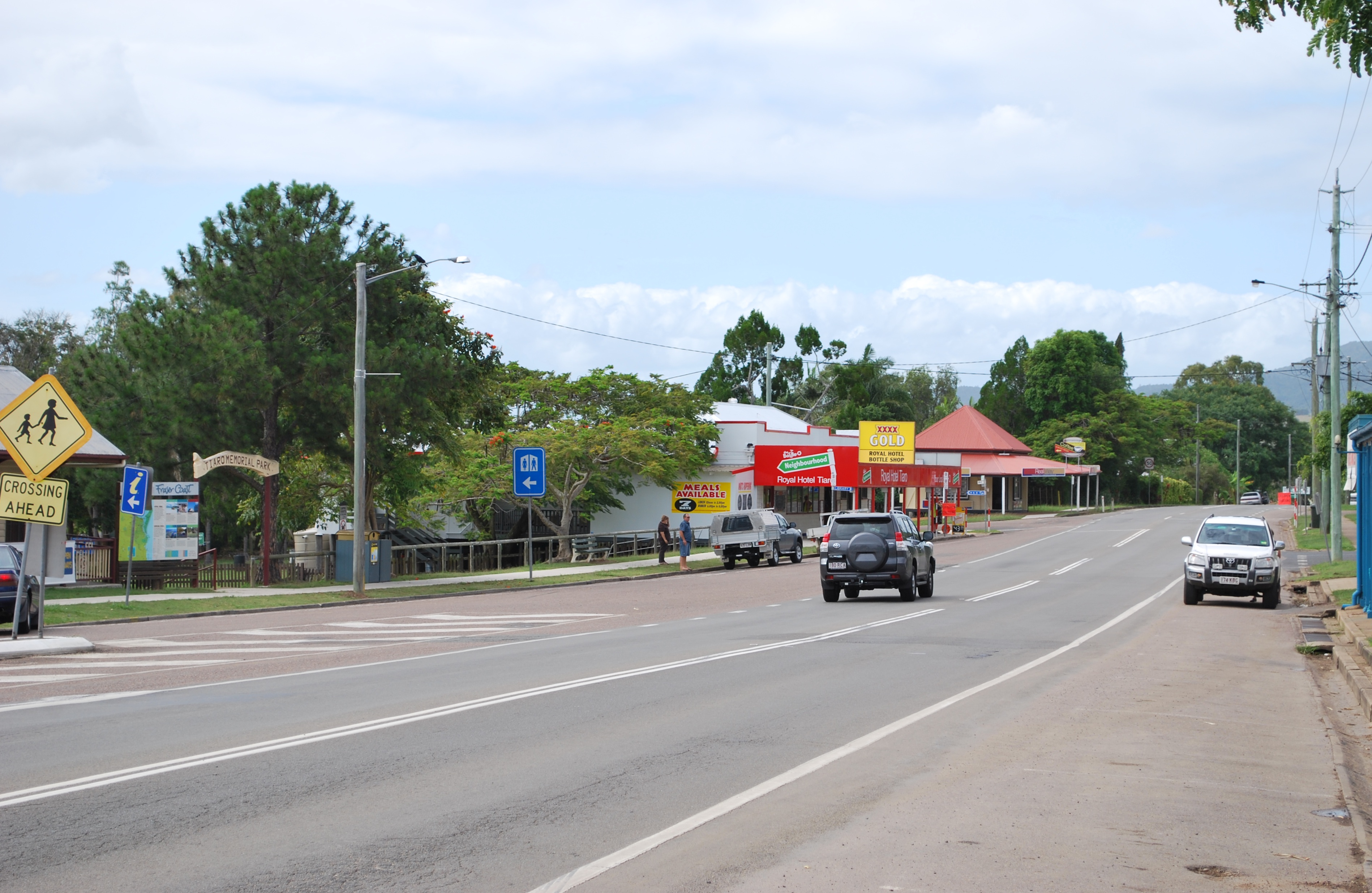
On the morning of Wednesday 6 April 1966, somewhere around 10:15 to 11:00 am, more than two hundred students and staff across Westall High School and the adjoining Westall State (primary) School in Clayton South, a suburb roughly 21 km southeast of central Melbourne, watched one or more low-flying objects cross the sky and descend behind a stand of pine trees in a paddock known as The Grange, about 400 metres from the school. This case file covers what witnesses reported, the official narrative, and a two-pass assessment with its evidence tier.
What did witnesses see at Westall High School and The Grange reserve?
On the morning of Wednesday 6 April 1966, somewhere around 10:15 to 11:00 am, more than two hundred students and staff across Westall High School and the adjoining Westall State (primary) School in Clayton South, a suburb roughly 21 km southeast of central Melbourne, watched one or more low-flying objects cross the sky and descend behind a stand of pine trees in a paddock known as The Grange, about 400 metres from the school. Many of the children were outside for a sports period when the object first appeared.
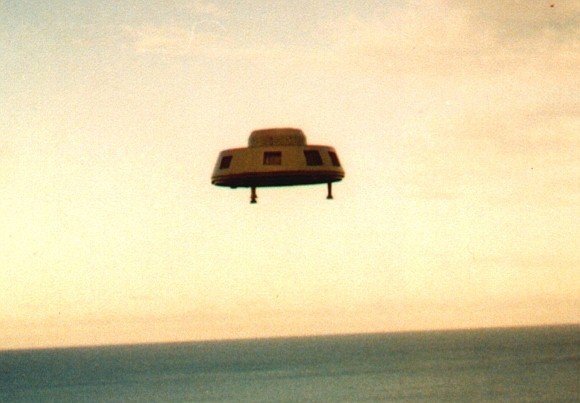
Witnesses described a silver, white or grey metallic object roughly the size of one or two family cars, most often likened to an upside-down bowl or a saucer with a domed top, and sometimes to a fat disc seen edge-on. Science teacher Andrew Greenwood, who arrived after a girl ran into his classroom shouting that there was a flying saucer outside, told American atmospheric physicist Dr James E. McDonald in a recorded interview the following year that the thing was "silvery-grey," "cigar-shaped, with a bulge in the middle, like a plate seen on the edge," and about two-thirds the length of a Cessna. He said it could hover, then accelerate and vanish from sight and reappear about 30 degrees away, and that it spent some minutes "playing cat and mouse" with light aircraft that had appeared near it. He estimated it was in view for roughly 20 to 25 minutes before it shot away to the northwest faster than the planes could follow.
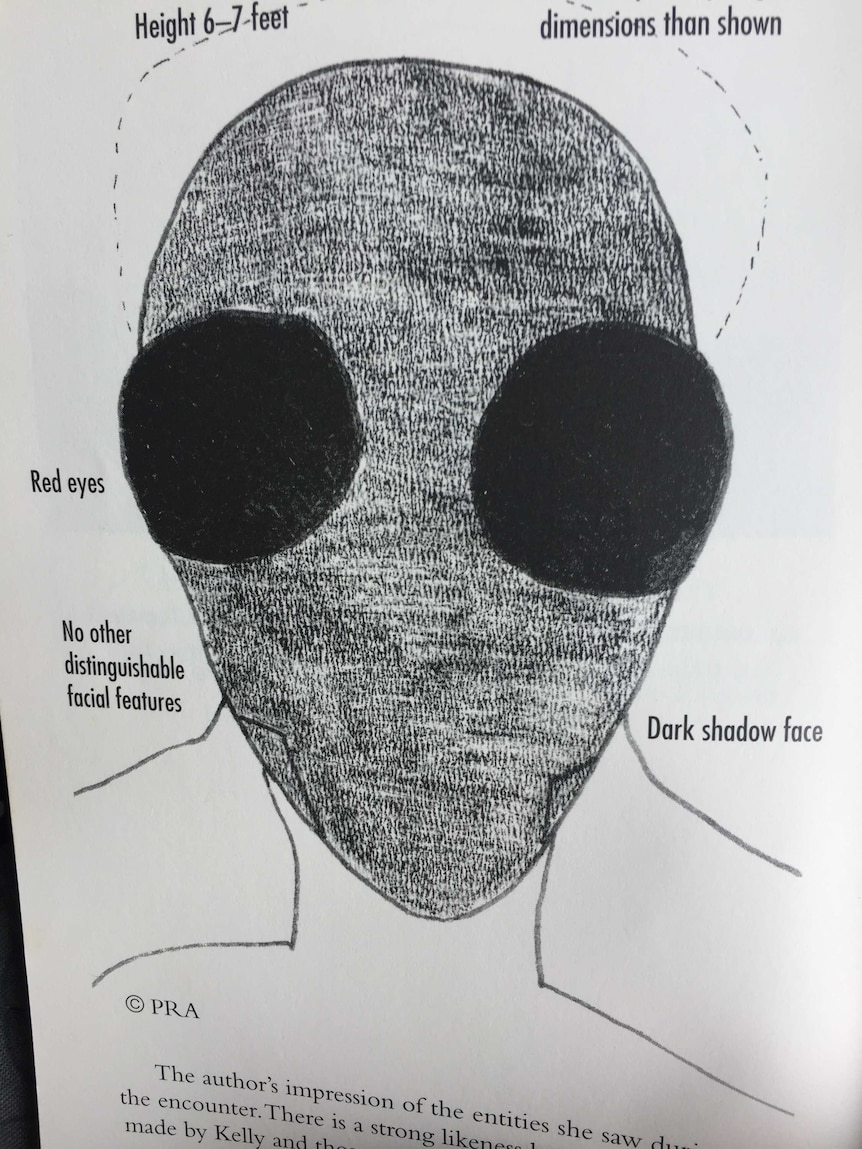
Other witnesses gave consistent accounts. Marilyn Eastwood (later Marilyn Smith), then about 14, sketched a round object "with a hump on top and round things underneath" and said the children were terrified, "hysterical," sure for a moment that it was the end of the world. Former student Colin Kelly reported three objects, one large and two smaller, that "just elevated while on their sides and disappeared at an ungodly speed." Joy Tighe (Joy Clarke) described two separate upright dome-shaped objects flying in varying directions, faster than the light aircraft nearby, that turned on edge and disappeared fast. Victor Zakry said he and other students were able to walk right up close to two objects sitting at ground level, each roughly 1.5 metres high and about 5.4 metres across, before they suddenly rose from the grass and took off, with one of them flying up and orbiting a small plane before heading southwest. Several people counted around five light planes, mostly Cessna types, that seemed to be chasing or circling the object without ever catching it.
After the object lifted away, students and at least one teacher walked to The Grange and found a roughly circular patch of flattened grass, the stalks swirled in one direction, ringed by a band of discoloured grass, with several indentations in the ground around it. Within days the trace site had been burned over, the witnesses said, leaving nothing to examine.
What is the official explanation?
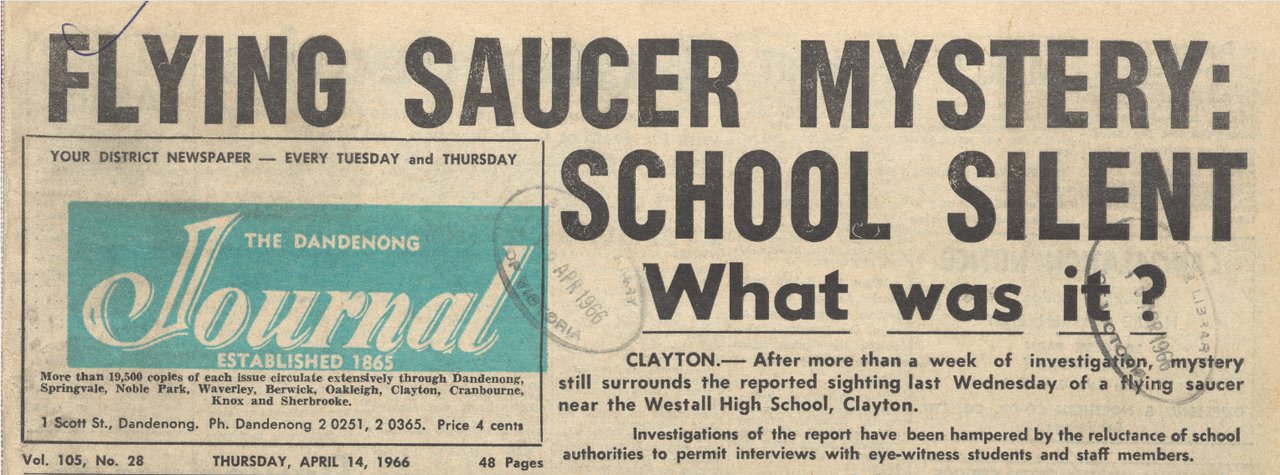
There was no public official inquiry of the kind that produced a written government verdict. The contemporary record is the local press and the privately run Victorian Flying Saucer Research Society. The Dandenong Journal broke the story on its front page on 14 April 1966 under the headline "Flying Saucer Mystery: School Silent," and returned to it on 21 April 1966 with "Who Were 5 Pilots?" Its reporters Des Carroll and Dave Oakley, working with a government meteorological physicist named Dr F. A. Berson, tried to follow the story up with the school, local residents, Moorabbin Airport, the Department of Air and the Army, and were told in each case that nobody knew anything. The paper wrote that it had tried to "penetrate the wall of secrecy which was hastily thrown up" after the sighting.
The only contemporaneous explanation floated by authorities was a balloon. The Age of 7 April carried the line "Object perhaps balloon," noting that the Weather Bureau had released a balloon at Laverton at 8:30 am and that a westerly wind could have carried it into the area. The school's own response was to deny rather than investigate. Headmaster Frank Samblebe held an assembly at which he stated flatly that flying saucers do not exist, and students and staff were instructed not to discuss what they had seen and not to talk to the press. Greenwood later told McDonald that the headmaster warned staff they could lose their jobs over it, that the school told the RAAF in effect to go jump in the lake, and that he himself was told he could be prosecuted if he spoke out. Channel Nine filmed interviews at the scene, but that newsfilm was never broadcast and is now lost.
The most serious modern attempt at an official-style explanation is civilian. Researcher Keith Basterfield, working through the National Archives of Australia and Freedom of Information requests, proposed that the object was a runaway high-altitude balloon from Project HIBAL, a joint United States and Australian Department of Supply program flown out of Mildura between roughly 1960 and 1969 to sample the upper atmosphere for fallout from British nuclear tests at Maralinga. HIBAL payloads carried a parachute and a trailing gas tube and could look pale and shiny in the sky, and Basterfield identified HIBAL flight number 292, scheduled for 5 April 1966, the day before Westall, as the candidate. Crucially, though, he found that the paperwork reporting the four scheduled April 1966 launches, including flight 292, is missing from the files, so there is no documentary record of where that balloon actually went. He has consistently described the balloon idea as probable rather than proven.
Decades on, the official files question is still open. Shane Ryan, an English lecturer at the University of Canberra who has tracked the case since the early 2000s, documented 142 people who saw the object and 197 who saw the ground marks, 77 of whom saw both, and reported that requested RAAF and government records have either not surfaced or cannot be located. The 1967 McDonald interview tapes survive in the James E. McDonald papers held in Special Collections at the University of Arizona.
What did the witnesses think it was?
The witnesses, who were overwhelmingly children and their teachers, believed they had seen a solid craft under control, not a stray balloon. Greenwood, a science teacher with no prior interest in flying saucers, stood by his account to McDonald in 1967 and described an object that hovered, darted, accelerated out of sight and dodged the light planes, behaviour he plainly did not think a balloon could produce. He also pointed out the oddity that nearby Moorabbin Airport denied having any aircraft up at the time, which he called rather silly given how many planes people watched circling the object.
Teacher Jeanette Muir was described as probably the first adult to notice the object. Woodwork teacher Gerry Shepherd summed up the morning by saying that Westall High School, as a teaching institution, simply ceased to function that day. The student witnesses have been strikingly consistent across sixty years of retellings. Marilyn Eastwood, Colin Kelly, Joy Tighe, Victor Zakry, Terry Peck (who said he could feel heat and hear a buzzing sound) and others have repeated essentially the same story at reunions and in interviews, independently of one another, with no sign of recantation. Many of them describe lasting unease about the way they were silenced afterwards, which they took as a sign that what they saw mattered to someone.
That silencing is itself part of why the witnesses, and later researchers, treat the case as real and unresolved rather than as a schoolyard panic. The "talk to no-one" instruction, the burning of the trace site, the unaired Channel Nine footage and the missing official paperwork are read by the witnesses not as proof of an alien craft but as proof that the event was real enough for authorities to want it closed down. As recently as the sixtieth anniversary in 2026, surviving witnesses such as Tania Vassie were still publicly asking the obvious question: if it really was nothing, then explain it and tell us what it was.
The dispute
The dispute is narrow and specific: it is the balloon explanation, advanced most rigorously by Australian researcher Keith Basterfield. Drawing on National Archives material and Freedom of Information requests, Basterfield argued that a runaway high-altitude balloon from Project HIBAL, the joint US and Australian fallout-sampling program flown from Mildura, could account for a pale, shiny, slow-moving object near Westall, and he named HIBAL flight 292, scheduled for 5 April 1966, as the likely culprit. HIBAL balloons did carry a parachute and a trailing gas tube and could appear silvery, which loosely fits some descriptions. This is a named researcher showing his working, which is exactly the kind of analysis that can move a case, so it is logged honestly here.
But the explanation falls well short of an identification, and Basterfield himself has only ever called it probable, not proven. The decisive gap is documentary: the memo reporting the four scheduled April 1966 HIBAL launches, including flight 292, is missing from the files, so there is no record that flight 292 was even launched, let alone that it drifted to Clayton South. Basterfield has stated that no official document has been found linking any HIBAL launch to Westall. A May 1966 memo from the Prime Minister's office about HIBAL indemnity makes no mention of any instrument package coming down in suburban Melbourne, which one would expect if a 180 kg payload had landed near a school full of children.
The balloon also struggles against the testimony. A passive payload drifting on the wind under a parachute does not hover, reverse direction, accelerate out of sight and reappear 30 degrees away, orbit a light aircraft, or outrun five chasing planes, yet that is what multiple independent witnesses, including a science teacher, separately described. John Sutcliffe, a member of the Mildura HIBAL team, told reporters bluntly that "there was no HIBAL balloon involved in Westall. I would have certainly known." Wind-data analysis of the period indicates the likely balloon track was northerly, away from the sighting area rather than toward it, and no balloon, payload or parachute was ever recovered or photographed at the scene. So while a counter-explanation exists and is taken seriously, it rests on a missing document and is contradicted by an insider and by the reported behaviour of the object. That is why this case is only barely disputed and not strongly disputed: there is no confession, no recovered prop, and no positively identified real-world object, only a plausible-but-unconfirmed candidate. The mass sighting, the corroborating ground trace and the official secrecy all still stand.
Is the Westall School UFO real? The two-pass assessment
Pass one, the ordinary readings. The leading mundane candidate is a balloon, and specifically a stray Project HIBAL fallout-sampling balloon, the explanation worked out by Keith Basterfield from archival and FOI material. A HIBAL rig could look pale and shiny and trailed a parachute and gas tube, and there genuinely was such a program flying out of Mildura in 1966. Weaker versions of the balloon idea point to the routine Laverton weather balloon mentioned by The Age. A second ordinary reading is mass excitement: a real but unremarkable stimulus, perhaps a distant aircraft or balloon, amplified into a saucer by a schoolyard full of children, which is roughly the line the headmaster took when he told an assembly that flying saucers do not exist. A third is simple misidentification of the several light aircraft that were demonstrably in the area that morning.
None of these closes the case. The HIBAL identification has no surviving launch record for the candidate flight, is denied by a HIBAL team member, is contradicted by period wind-track analysis pointing the balloon the wrong way, and cannot explain an object that hovered, darted, reversed and outran chasing planes as described by a science teacher and many students. The mass-hysteria reading has to ignore that the accounts are detailed, specific, mutually consistent, given by adults as well as children, and accompanied by a physical ground trace that several people walked up to and that was then burned over. The plain-aircraft reading fails because witnesses watched the planes and the object at the same time and saw the planes unable to keep up.
Pass two, if something real and unexplained was present. Then we have a daylight mass sighting of one or more low, structured, metallic-looking objects, sized like cars, that manoeuvred under apparent control, interacted with light aircraft, descended to or near the ground at The Grange, left a swirled circular trace with peripheral indentations, and departed at high speed, all witnessed by well over a hundred named and traceable people and reported within days by the local press and a civilian research society. The accompanying official behaviour, the gag order, the unaired television footage, the burned trace site and the missing files, is consistent with authorities treating the event as real enough to manage rather than dismiss.
Weighing the two passes: a serious, named, method-shown counter-explanation exists, which keeps this out of the unexplained-and-undisputed tier, but that explanation is unproven, rests on a missing document, is denied by an insider and does not fit the reported motion, so it does not close the case either. The corroborated mass testimony and the physical trace survive the challenge. That places the Westall School UFO in the Barely Disputed tier: an official-style counter-explanation is on the table, but it is partial and contested, and the case largely stands.
Sources
- blogs.slv.vic.gov.au/our-stories/strange-lights-in-the-sky-the-westall-ufo-event-1966
- web.archive.org/web/20260510144840/https://localhistory.kingston.vic.gov.au/articles/528
- theozfiles.blogspot.com/2014/08/westall-66-ufo-or-hibal-answer-is.html
- ufos-scientificresearch.blogspot.com/2016/03/andrew-greenwood-and-westall-1966-audio.html
- www.davidhalperin.net/the-westall-ufo-a-teachers-testimony-part-1/
- www.newdawnmagazine.com/articles/the-1966-westall-incident-refuting-the-official-explanation
- www.rnz.co.nz/news/world/591603/after-60-years-witnesses-to-australia-s-biggest-ufo-sighting-want-answers
- wearethemutants.com/2018/05/21/talk-to-no-one-the-continuing-mystery-of-the-westall-ufo/
- atollon.com.au/article/westall-1966/
More cases from this region: UFO sightings in Australia