The Australian Sea Fury Incident
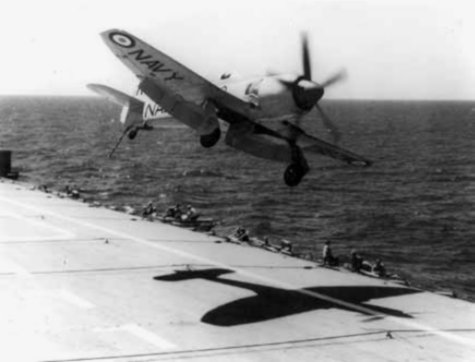
On the evening of 31 August 1954 Lieutenant J. A. "Shamus" O'Farrell, a 25 year old Royal Australian Navy pilot, was flying a Hawker Sea Fury fighter back to the naval air station at Nowra, New South Wales, after a solo night navigation exercise that had taken him on a Nowra to Young to Temora to Yass circuit. This case file covers what witnesses reported, the official narrative, and a two-pass assessment with its evidence tier.
What did witnesses see at Airspace southwest of Goulburn?
On the evening of 31 August 1954 Lieutenant J. A. "Shamus" O'Farrell, a 25 year old Royal Australian Navy pilot, was flying a Hawker Sea Fury fighter back to the naval air station at Nowra, New South Wales, after a solo night navigation exercise that had taken him on a Nowra to Young to Temora to Yass circuit. He was at about 13,000 to 15,000 feet, southwest of Goulburn, cruising at a speed his own written report records as "indicating 220 knots."
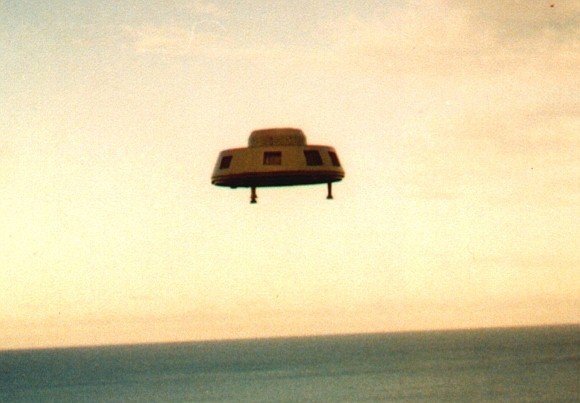
In his official 1954 statement O'Farrell wrote: "After contacting Nowra at approximately 1910, I noticed a very bright light closing fast from 'one o'clock'. This bright light crossed ahead of me and continued to a position on my port beam where it appeared to orbit." A second similar light then appeared at his nine o'clock position, passed about a mile in front of the Sea Fury, and turned into the position where the first light had been. Of the speed he wrote: "Their apparent crossing speed was the fastest that I have ever experienced, and at the time I was indicating 220 knots." He could make out little structure, recording only "a vague shape with the white light situated centrally on top" and noting he saw no other lights. The two lights finally reformed at his nine o'clock and "disappeared on a north-Easterly heading."
The decisive feature is that this was not a lone visual. O'Farrell called Nowra and asked whether they had him on radar. The ground radar operator, Petty Officer Keith Jessop, working the G.C.I. remote display at HMAS Albatross, recorded in his own 1954 report: "At 1907 aircraft 921 called up and asked if we had him on radar. After checking G.C.I. remote display, we found that two paints appeared on the display approximately 280 degrees 32 miles." Jessop logged three echoes in total, the Sea Fury and two unidentified returns moving in company with it. He added that ground control offered the pilot an identification turn: "About two minutes later we told 921 to fly 180 degrees if he wanted a bearing, so we could identify him. His reply was 'NEGATIVE', so we did not track the paints any further."
O'Farrell landed visibly rattled. A Surgeon Commander examined him on the ground, in part, as O'Farrell later put it, "to make sure I hadn't been drinking." In later interviews from the 1990s onward he expanded the account, describing close, dark, cigar shaped masses, saying things like "I could really see the dark mass and that they were quite big," and recalling telling ground control "I think I'm the central one" when asked which paint was his.
What is the official explanation?
The event was handled as a serious intelligence matter from the start. Within the Royal Australian Navy the pilot and radar operator filed written reports the same night, and the Directorate of Naval Intelligence assessed O'Farrell as "an entirely credible witness" who was visibly "shaken" by the experience "but remains adamant that he saw these objects." The internal documentation recorded the air-traffic situation in the area, stating plainly: "There were no naval or Air Force aircraft in the air at the time but there was a T.A.A. Convair at 14,000 ft on a northerly course." That Trans-Australia Airlines Convair 240 airliner detail, present in the original 1954 files and even mentioned in period newspapers, is central to the later dispute.
The story broke publicly in December 1954. The Daily Telegraph of 16 December 1954 reported that a Navy pilot had seen two brightly lit objects "flash past" his Sea Fury over Goulburn at about 9.30 p.m., objects that "appeared to be spinning at fantastic speed" and "easily passed his Sea Fury fighter," with the radar screen showing "three objects at his position, his Sea Fury and two other flying objects" that "radar officers were unable to identify." The Minister for the Navy, Mr. Francis, confirmed publicly that the incident had occurred on a cross-country flight from the Naval Air Station at Nowra on 31 August. By 17 December 1954 the regional press, including the Northern Star in Lismore, ran the headline "FLYING SAUCERS CONFIRMED BY NOWRA RADAR."
The full naval file then stayed classified for decades. Australian researcher Bill Chalker obtained a copy from the Directorate of Naval Intelligence in 1982 and published the case in detail in his work on Australian official UFO records, including his book The Oz Files (1996). In 1973, during a visit to Australia arranged through Defence channels, the American astronomer and former Project Blue Book consultant Dr. J. Allen Hynek interviewed O'Farrell personally and placed the sighting among roughly a dozen cases worldwide reported by aviation professionals that he regarded as resisting conventional explanation, telling the pilot in effect that his "sighting cannot be explained away." From 2003 to 2008 researcher Keith Basterfield, working through the Disclosure Australia Project, relocated the surviving files in the National Archives of Australia, including series MP926/1 (control symbol 3079/101/1) and SP338/3 (control symbol 13/4/10). A separate Joint Intelligence Bureau investigation file is referenced in the record but has never been located, and that gap is the main reason the case has never been formally closed.
What did the witnesses think it was?
O'Farrell himself never wavered on the core claim that two solid, fast objects flew in company with his aircraft. He was no fringe figure: he went on to a 37 year naval career, rising to Commodore and serving as Naval Attache to the United States, and he maintained his account until his death in 2017. The Directorate of Naval Intelligence's own contemporaneous judgment that he was "an entirely credible witness" who remained "adamant" is, in effect, the Navy vouching for its own pilot.
The corroboration is what lifts this above a single airman's word. Petty Officer Keith Jessop independently logged two unidentified radar paints accompanying aircraft 921, giving a bearing and range (280 degrees, 32 miles) in his own 1954 report. O'Farrell in later years also named additional ground witnesses, a Department of Civil Aviation officer at the Marulan non-directional beacon and an air traffic controller at Sydney's Mascot Airport, though these are recollections rather than filed statements. Members of 723 Squadron preserved the episode in their unit Line Book, pasting in newspaper clippings about the "flying saucers" alongside drawings, a record still held at the Fleet Air Arm Museum at Nowra.
What O'Farrell believed is best read through his consistency under scrutiny. He submitted to a medical check on landing, sat for a face to face interview with Hynek in 1973, and repeated the story on camera in the 1990s. He never claimed to know what the objects were. His position was simply that they were real, structured, under control, and far faster across his field of view than anything he had flown against.
The dispute
The dispute is not about whether something happened but about how much of O'Farrell's mature account can be trusted, and whether an ordinary aircraft is hiding in the file. It was advanced by Australian researchers Keith Basterfield and an Adelaide colleague in a 2017 "cold case" re-analysis published through Project 1947, built by setting O'Farrell's original 1954 reports against the versions he told from the 1990s on. Their method was documentary comparison, not a new natural-cause reconstruction, and it surfaced real drift. On speed, the 1954 report says "I was indicating 220 knots," while a 1991 account has him "cruising about 330 knots," a fifty percent jump that matters because the whole impressiveness of the sighting rests on relative closing speed. On maneuvering, Jessop's 1954 report says O'Farrell answered "NEGATIVE" to a suggested 180 degree identification turn and the paints were not tracked further, yet by 1993 O'Farrell was describing how he "did a quick 180 and then continued on around and made a 360." On the object itself, the contemporaneous "vague shape with the white light situated centrally on top" and "no other lights" hardened over the decades into close, "quite distinct" dark cigar shaped masses.
The second strand is the Trans-Australia Airlines Convair 240 that the naval file places "at 14,000 ft on a northerly course" at the time, an aircraft O'Farrell's later interviews never acknowledged. Skeptics note this scheduled airliner was unquestionably in the sky near him, and that an unfamiliar set of lights at night can be badly misjudged for range and speed.
Neither strand actually identifies the objects, and that is why this sits in the barely disputed tier rather than anything stronger. A single Convair cannot be two radar paints, cannot orbit a fighter, and at a cruise of roughly 243 knots cannot produce the crossing speeds described even in the conservative 220 knot version; the researchers themselves do not present it as a solution, only as a loose end the original investigators never tied off. The discrepancies in O'Farrell's later telling are a real caution about leaning on his 1990s embellishments, but they do not touch the load-bearing facts that are fixed in the 1954 paperwork: two unidentified radar returns logged independently by Petty Officer Jessop, a pilot the Navy's own intelligence branch called "entirely credible," and a file the investigators closed as unresolved. The cold-case authors land exactly there, concluding that the case "remains an intensely puzzling one" and that fuller resolution waits on the missing Joint Intelligence Bureau file. That is a partial, contested, no-method-shown counter-case, so the event largely stands.
Is the Australian Sea Fury Incident real? The two-pass assessment
Pass one, the ordinary readings. The strongest mundane candidate is misidentification of conventional traffic, and the file hands us one aircraft already: a Trans-Australia Airlines Convair 240 logged "at 14,000 ft on a northerly course" near O'Farrell's position. At night, lights on an unfamiliar airliner can be misjudged badly for range and speed, and the 2017 cold-case review by Keith Basterfield and an Adelaide researcher fairly showed that O'Farrell's later accounts inflated his speed from a documented 220 knots to 330 knots, added a 360 degree turn his radar operator's 1954 report contradicts, and sharpened a "vague shape" into distinct cigar shaped masses. Other ordinary possibilities, a bright planet, an astronomical body, or a single aircraft seen twice, founder on the same fact that defeats the Convair: the Nowra ground radar independently painted two unidentified returns moving with the Sea Fury, logged by Petty Officer Keith Jessop at 280 degrees and 32 miles. One airliner is not two radar paints orbiting a fighter, and a Convair cruising near 243 knots cannot generate the crossing speeds reported even at the conservative figure. The honest mundane verdict is that O'Farrell's memory drifted over forty years and his most dramatic later details should be discounted, but no specific ordinary object has been matched to the two paints.
Pass two, if it is what the documents describe. Then in August 1954 two structured, controlled objects flew in formation with a Royal Australian Navy fighter, crossed its track at speeds its pilot, a future Commodore, called the fastest he had ever experienced, briefly orbited it, and left to the northeast, all while a separate radar operator on the ground tracked two unidentified returns keeping company with the aircraft. The Navy's own Directorate of Naval Intelligence rated the pilot "an entirely credible witness," J. Allen Hynek ranked it among the dozen or so aviation cases worldwide he could not explain, and the file was closed unresolved rather than written off.
The material here is authenticated official documentation, not a contested photograph: filed pilot and radar reports, a Minister for the Navy confirming the event in Parliament-adjacent press in December 1954, contemporaneous newspaper coverage, and a declassified intelligence file. The object remains officially unexplained. That alone would point at Verified Unexplained. But a genuine, method-shown civilian re-analysis exists, the documented drift in O'Farrell's later testimony and the unaddressed Convair, and an honest archive cannot ignore it. Because that counter-case is partial and identifies nothing, while the load-bearing 1954 facts of two independent radar paints and an officially credible pilot still stand, the correct tier is Barely Disputed. The case largely holds; the dispute trims the embellishments without solving the core.
Sources
- www.project1947.com/kbcat/sea_fury_1954.htm
- ufos-scientificresearch.blogspot.com/2017/06/cold-case-review-31-august-1954-sea.html
- web.archive.org/web/20260604132942/https://www.auforn.com/Bill_Chalker_30.html
- www.southcoastregister.com.au/story/8295105/odd-history-nowra-had-its-own-alleged-ufo-sighting/
- www.thinkaboutitdocs.com/navy-sees-flying-saucers-on-radar-screen/
- trove.nla.gov.au/newspaper/article/96500678
More cases from this region: UFO sightings in Australia